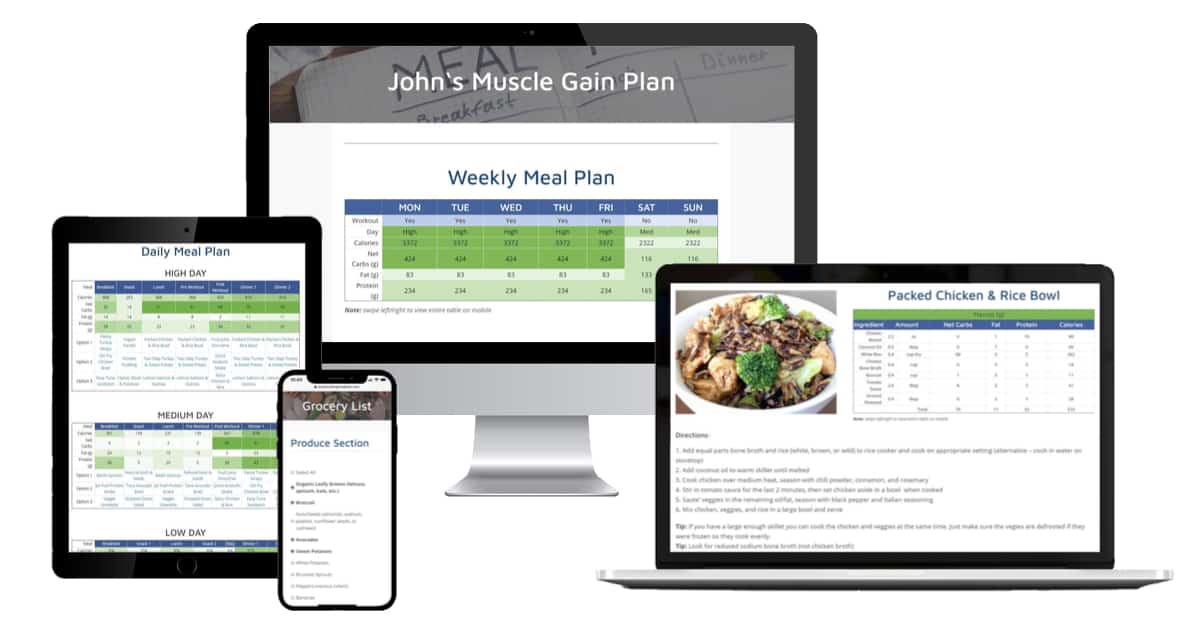
Your Custom Macro Meal Plan
Get a Nutritionist Designed Meal Plan Based on Macros
By: Jeremy Fox, CNC, CPT – Updated: May 12, 2024
Are you looking for a tailored diet that can help you hit your macros? Would you like a personalized meal plan that includes recipes designed to fit your unique macros?
No two people are alike, so you need an individual plan to help you reach your specific goals. With this online calculator, you’ll receive macro targets based on your body type, activity level, and fitness goals.
Additionally, you’ll get an easy-to-follow meal plan that comes with a grocery list and over 50 delicious meals catered to your unique macronutrient targets. Enter your details below to start with a free plan!
Tracking Macros for Health & Fitness
It’s important to understand the role of carbohydrates, protein, and fat before starting a new diet or nutrition program. These macronutrients are just one piece of a larger nutrition puzzle that includes calorie balance, food choices, and meal timing.
Counting macros can be an effective strategy for controlling your calorie intake for fat loss and eating enough protein to maintain or build muscle mass. Additionally, it involves paying more attention to food groups, which can help you make healthy food choices.
However, a macro meal plan is only as effective as the targets you set. So, I’ll walk you through how to find your macros.
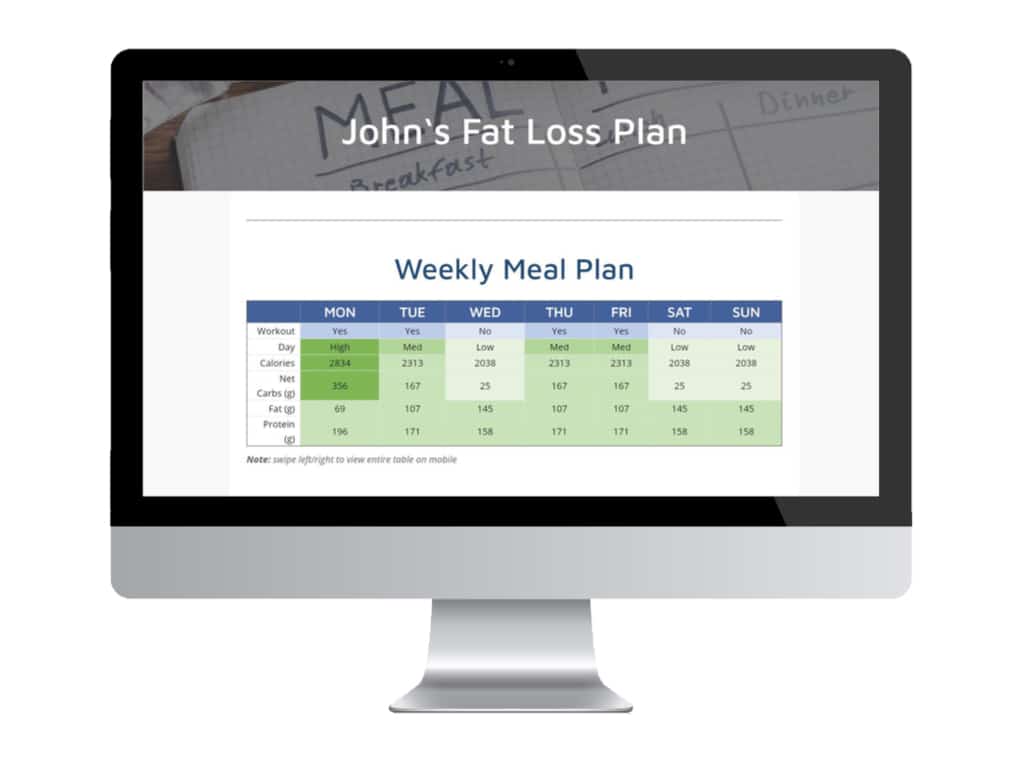
Macro Meal Plan Basics
In this section, I’ll explain how to calculate the grams of carbs, protein, and fat you should consume based on your calorie intake and desired macronutrient ratio.
Calorie Target
The most important factor in a macro diet is the number of daily calories consumed. Therefore, it is crucial to set a calorie goal before calculating your macros.
It’s best to determine your maintenance calories as a starting point. This number is equivalent to the total number of calories you burn.
We can determine your total daily energy expenditure (TDEE) from your basal metabolic rate, daily activity, and exercise. Then, we create a calorie deficit for fat loss or a calorie surplus for building muscle.
Macro Ratio
The next step is to determine your macronutrient ratio. Again, there is no magic number here, but some general nutrition guidelines are worth following.
Any diet should prioritize getting enough protein to maintain lean mass. A high protein intake refers to getting 20-35% of your calories from this macronutrient.
While low-carb diets are popular for weight loss, evidence suggests moderate to high-carb diets work just as well. Carbohydrates are your body’s preferred source of energy, so athletes and active people may have better energy levels with a higher carb intake, especially for muscle building.
Lastly, dietary fat intake should round out the remainder of your calories. Here are examples of healthy macro ratios for a low-, medium-, or high-carb diet.
Table 1. Macro Ratios for IIFYM Diet
| Diet | Carbs | Fat | Protein |
|---|---|---|---|
| Low-Carb | 5-20% | 45-75% | 20-35% |
| Med-Carb | 20-40% | 25-60% | 20-35% |
| High-Carb | 40-50% | 15-40% | 20-35% |
The table above shows that protein intake remains consistent. However, when consuming more carbohydrates, you should lower fat intake, and vice versa. You can also adjust your carb intake daily based on your energy needs; this is called carb cycling.

This graph illustrates the typical macronutrient percentages for a low-carb, medium-carb, and high-carb diet. These are not set in stone, as long as your macros add up to 100%.
Macro Targets
Finding your macro targets in grams requires some simple math. My macro calculator automatically does this for you. But let’s look at an example so you know how it works.
So, let’s say your macro goals are 30% carbs, 30% protein, and 40% protein, and you’ve determined you need 1,800 total calories per day. Here’s how to convert from percentages to calories for each macronutrient.
- 1,800 x 30 / 100 = 540 calories from carbs
- 1.800 x 30 / 100 = 540 calories from protein
- 1,800 x 40 / 100 = 720 calories from fat
Next, we find your macro targets in grams by dividing the calorie targets by the number of calories per gram for each macronutrient.
- 540 calories / 4 calories per gram = 135 grams of carbs
- 540 calories / 4 calories per gram = 135 grams of protein
- 720 calories / 9 calories per gram = 80 grams of fat
To recap, these are the daily macro targets for someone following a 1,800-calorie 30-30-40 diet. But how do you build a meal plan around grams of protein, carbs, and fat? I’ll show you.
Macro Meal Planning
In this section, I’ll walk you through the process of planning meals around your macro targets.
Meal Planning
The first step in planning your meals should be figuring out your schedule. While the traditional three meals a day may be acceptable, it might not be the best approach if you are trying to improve your health and fitness.
Instead, it is generally better to consume several smaller meals throughout the day, with protein as the primary macronutrient. You can then add carbs and fat based on your energy requirements.
For my clients, I usually plan meals that have higher carb content around their workouts and lower carb content when they are less active. Utilizing this kind of nutrient timing can help you reach your fitness goals faster.
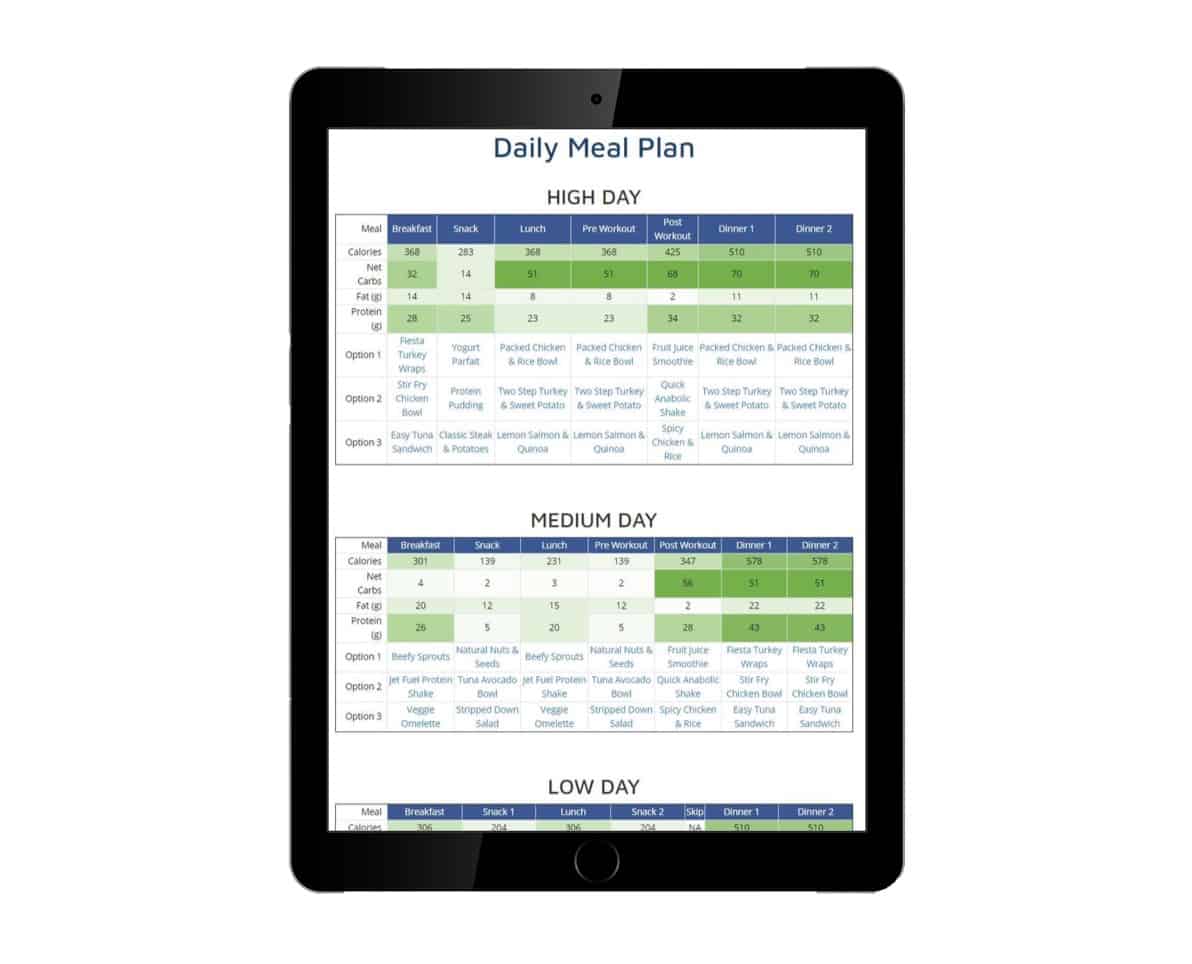
Note: The different shades of green show meals that are higher or lower in certain macros.
Meal Ideas
To ensure that your meals align with your macros, you need to pick foods and recipes that fit your macronutrient requirements for every meal of the day.
This can be a time-consuming process that requires a comprehensive understanding of the macronutrient content of different foods or the use of a macro tracking app.
However, with my Premium-level macro meal planner, you don’t need to worry about any of that. I provide six recipe options that fit your macronutrient targets for every meal.
This means you don’t have to spend hours looking at food labels, logging foods in an app, or counting calories.
Food List
Once you’ve picked your recipes, the next step is to create a shopping list so you can go to the grocery store and buy your food. With my macro plan, you get a list of foods you need to cook the healthy recipes.
When following a balanced diet plan, it’s best to choose mostly whole foods and avoid ultra-processed foods. Here are some examples of the best foods for healthy eating.
- Carbohydrate Sources: Whole grains like brown rice and oatmeal or high-glycemic starchy vegetables like sweet potatoes.
- Fat Sources: Healthy fats like avocados, olive oil, and nuts.
- Protein Sources: Lean protein like chicken breasts, wild-caught fish, grass-fed beef, and low-fat dairy.

Meal Prep
After you’ve bought your groceries, the final step is to unpack them and cook your healthy meals. Meal prep can be really helpful if you want to save time and eat smaller, more frequent meals.
Don’t worry; you don’t have to spend a full day meal prepping. You can cook a small batch for a few meals or enough to feed the whole family.
Another time-saving trick is to snack on ready-to-eat foods or make simple shakes and smoothies. Whichever method you choose, healthy eating doesn’t have to be labor-intensive!
Example Macro Meal Plan
At this point, you might be feeling a little information overload. So, it’s easiest to jump into some real-life macro meal plan examples.
I created the following example meal plans using the macro targets we calculated earlier – 135 g carbs, 135 g protein, and 80 g fat.
But remember, your meals and quantities will vary depending on your body size, workout routine, and daily activity.
Active Day
This meal plan includes six meals, including pre- and post-workout, on days you exercise. I’ve provided three recipe options for each meal (your plan will have six).
This plan is set up for someone who works out in the morning, but your plan would be arranged to fit your schedule. If the lunch meal is too large to eat in one sitting, you can split it up into two meals.
1. Breakfast Options (Pre-Workout Meal)
- Protein Oatmeal (Proats) – 1/2 cup old-fashioned oats, 1/2 scoop whey protein powder, 1/2 tbsp honey
- Blueberry Banana Smoothie – 1-1/2 cups frozen blueberries, 1 banana, 1 scoop whey protein powder
- Breakfast Burrito – 3 oz chopped potatoes, 1.5 oz ground turkey, 1/2 egg, 1/4 cup chopped peppers, 1 tortilla
2. Post-Workout Meal Options
- Easy Recovery Shake – 1 scoop whey protein powder, 1/2 cup maltodextrin (or 16 oz of fruit juice)
- Cottage Cheese & Fruit – 3/4 cup low-fat cottage cheese, 2 cups fruit
- Strawberry Cheesecake Smoothie – 1 cup strawberries, 5 oz Greek yogurt, 1/2 scoop whey protein powder, 3 graham crackers
3. Lunch Options
- Chicken & Rice – 5 oz chicken breast, 2/3 cup (dry) white rice, 2/3 cup bone broth, 2/3 cup broccoli
- Pasta with Meat Sauce – 16 oz (dry) pasta, 16 oz lean ground beef, 16 oz tomato sauce (batch recipe makes 6 servings)
- Salmon & Quinoa – 2 oz salmon, 2/3 cup (dry) quinoa, 6 asparagus spears
4. Dinner Options
- Rice Cake PBJ – 4 rice cakes, 1 tbsp peanut butter, 1 tbsp jam
- Turkey & Sweet Potato – 2 oz turkey breast, 8 oz sweet potato, 1/2 tbsp butter
- BBQ Meatballs – 1 lb lean ground turkey, 3 lbs sweet potatoes, 1 egg, 4 oz tomato sauce (a serving is 7 meatballs; recipe makes about 6 servings)
5. Snack 1 Options
- Steak & Potato – 3 oz strip steak, 5 oz baked potato, 1/4 tbsp butter
- Stir Fry Chicken – 2 oz lean ground chicken, 1/4 cup (dry) brown rice, 1/2 cup stir fry veggies, 1/2 tbsp coconut oil
- Turkey Wrap – 8 oz 99% lean ground turkey, 3 oz chopped peppers, 1 tbsp olive oil, 3 oz tomato sauce, 3 tortillas (a serving is 1 wrap; recipe makes 3 servings)
6. Snack 2 Options
- Protein Pudding – 1/2 cup Greek yogurt, 1/2 scoop whey protein powder, 1/3 banana
- Yogurt Parfait – 1/2 cup Greek yogurt, 1/2 scoop whey protein powder, 2 oz berries, 1/2 oz nuts
- Apple Slices & Protein Shake – 8 apple slices, 3/4 scoop whey protein powder
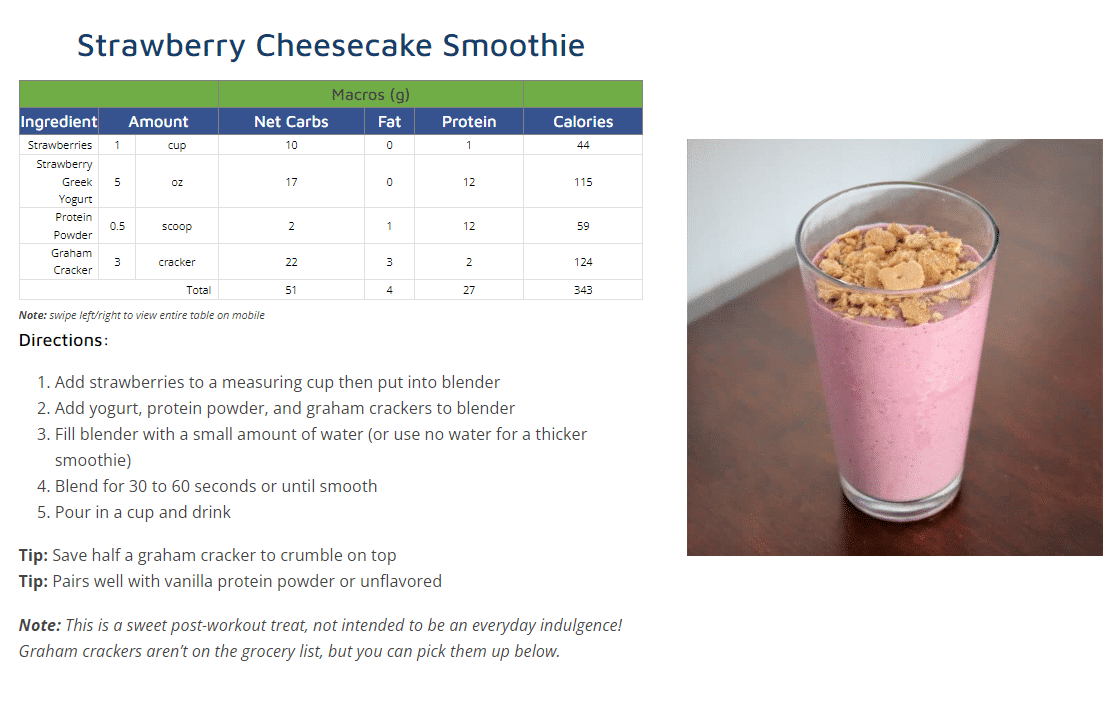
Here’s an example of how your recipe would look for the Strawberry Cheesecake Smoothie.
Rest Day
On days you don’t work out, the meal plan consists of five meals. Again, here are three recipe options for each meal from which you can choose.
1. Breakfast Options
- Veggie Omelette – 1 whole egg, 2-1/2 egg whites, 2 oz chopped peppers, 1 oz shredded cheese, 1/2 tbsp olive oil
- Protein Coffee Creamer – 1 cup black coffee, 1 whole egg (pasteurized), 1/2 scoop protein powder, 1 tbsp coconut oil
- Jet Fuel Protein Shake – 1 scoop whey protein powder, 1 tbsp MCT oil
2. Morning Snack Options
- Almonds – 1 oz raw almonds
- Avocado Tuna Salad – 1/2 avocado, 1 oz tuna, 1/2 cup chopped red onion, pinch chopped cilantro, 1 tsp lemon juice
- Spring Mix Salad – 2 cups spring mix lettuce, 1 oz shredded cheese, 1 tbsp vinaigrette dressing
3. Lunch Options
- Chicken Bowl – 3 oz lean ground chicken, 1/4 can green beans, 1-1/2 oz tomato sauce, 1/2 tbsp olive oil
- Chicken Salad – 2 cups spring mix lettuce, 3 oz grilled chicken breast, 1 tbsp vinaigrette dressing
- Beef & Sprouts – 3 oz 85% ground beef, 3 oz Brussels sprouts, 1/4 tbsp olive oil
4. Afternoon Snack Options
- Jacked Green Tea – 1 packet green tea, 1 cup boiling water, 1 tbsp coconut oil
- Walnuts – 1 oz raw walnuts
- Pepitas – 1 oz raw pepitas or pumpkin seeds
5. Dinner Options
- Turkey Bowl – 5 oz ground turkey, 1/2 cup stir fry veggies, 1/2 tbsp olive oil
- Texas Brisket – 3 oz brisket, 2 oz steamed broccoli
- Bison & Broccoli – 3 oz ground bison (or beef), 4 oz steamed broccoli
Here’s a short video showing you how to make the avocado tuna salad recipe. You can also use it as a sandwich filling for a higher-carb meal.
Actual Macro Meal Plan Results
As a NASM Certified Nutrition Coach and Personal Trainer, I’ve created healthy meal plans for hundreds of clients. But I don’t just talk the talk.
I also use these macro calculations for my personal muscle gain and weight loss meal plans. Here’s an example of the body transformation I’ve achieved with a meal plan based on macros.

Of course, your results will vary depending on your body, workout routine, and diet type.
But you can think of me as your online nutrition coach. When you sign up for a macro meal plan, I personally respond to your questions and help you reach your fitness goals.
Finally, I should point out that these macro meal plan principles work whether you’re a 20-something bodybuilder or a 40-plus soccer mom. Here is what some of my clients are saying:
More than just tracking macros, this program gives you insight into when you should be getting specific macros to help fuel your training and provides easy meal recipes to ensure you hit them.
Jeremy is extremely responsive by email and has helped me cater my plan as my specific training changes.
This is exactly what I was looking for. I’ve been wanting to try carb cycling to bust through the plateau period of my weight loss journey. I found this program to be straightforward and affordable.
There are so many gimmicky alternatives that take your money and give you nothing. This is about as simple as it gets.
This plan is exactly what I have been looking for. It provides me with meal options and workouts for the day and it takes away the hassle of having to keep up with tracking my calories since it does it for me. I love it and has kept me accountable.