
How Much Protein Is Actually In Your Chicken Breast
Nutritionist breaks down the real nutritional value of chicken.

Written By: Jeremy Fox CNC, CPT
Published: May 14, 2025

Image created by author for Nutritioneering.
A quick Google search reveals that 1 cup of diced or chopped chicken contains 43 grams of protein.
But this generic result raises more questions than answers. Like:
- How does that translate to ounces or other serving sizes?
- Was the chicken raw or cooked?
- Did it have skin or not?
I aim to answer those questions to help you understand the actual protein content of the chicken you’re eating.
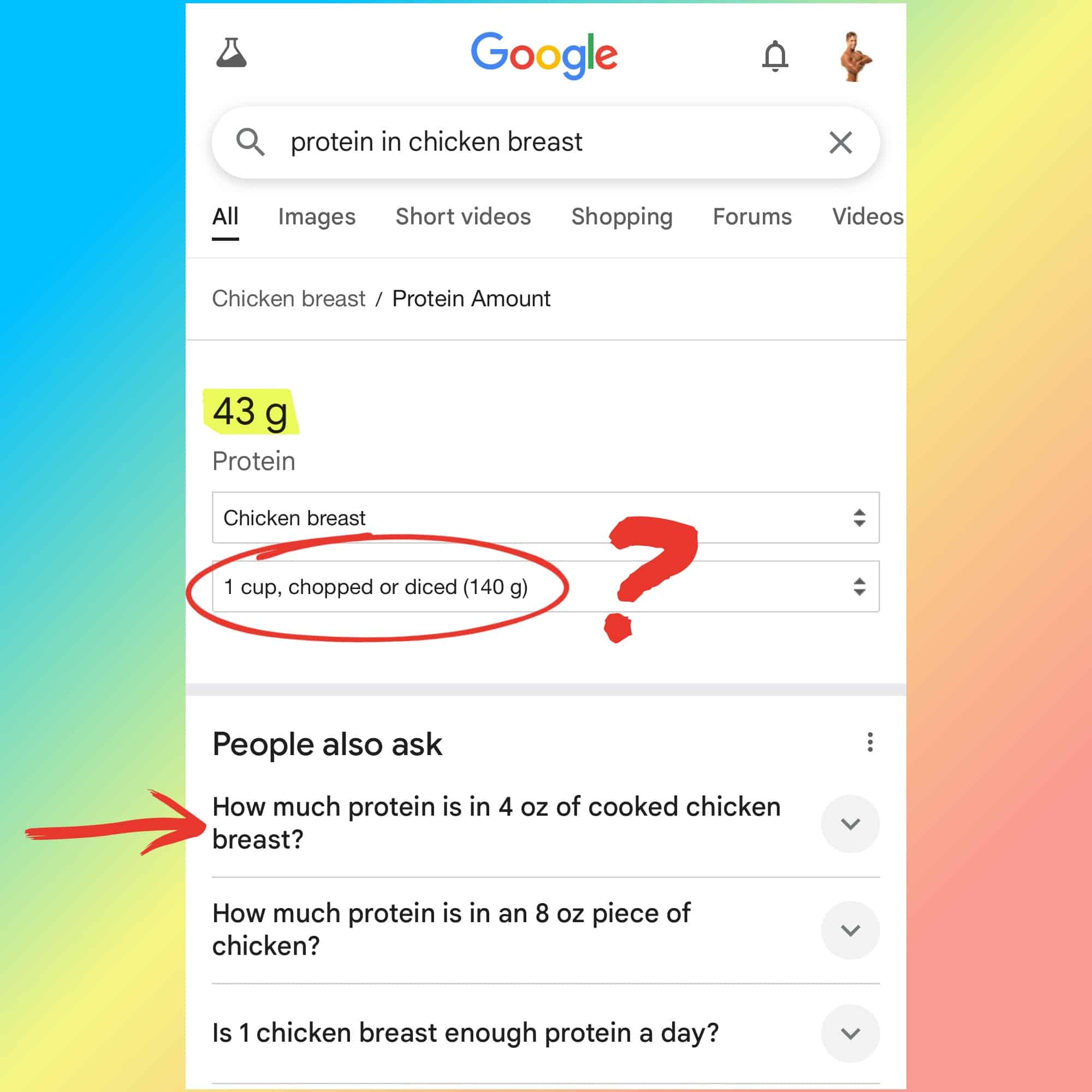
Screenshot of Google search results edited by author.
Quantifying Your Serving Size
Weight in ounces or grams is the most common way of quantifying the amount of chicken you eat.
Most nutrition facts sources measure the chicken before cooking. A typical serving of chicken breast is 4 ounces or around 113 grams.
A 4 oz raw chicken breast contains about 25 grams of protein, according to the USDA food database.
Weighing Chicken Raw vs Cooked
However, it’s important to note that a chicken breast loses approximately 25% of its weight. The rapid weight loss is primarily due to water evaporation, so it doesn’t reduce the protein content.
That means 4 oz of cooked chicken contains roughly 34 grams of protein, since more of it’s mass is meat versus water.
This change in mass can be a bit confusing when meal prepping. But you can use a simple conversion factor to determine the protein content of chicken after cooking.
Since the cooked chicken breast weighs approximately 75% of its uncooked weight, I divide the cooked weight by 0.75 to find the raw weight.
Then, you can enter that number in calorie-tracking apps like MyFitnessPal to find your chicken breast protein and macros.
Protein for Different Types of Chicken Breasts
Another key point is that chicken breasts come in all sorts and varieties, including:
- Boneless
- Bone-in
- Skinless
- And skin-on
Bone-In Chicken Breast
Bone displaces meat, which means the chicken breast has less protein per ounce when weighed with the bone still inside.
Typically, the breastbone accounts for about half of a chicken breast’s total weight. So, a 4-ounce chicken breast would only have about 2 ounces of actual meat.
With this in mind, a 4 ounce bone-in chicken breast should contain 12–13 grams of protein.
Skin-On Chicken Breast
Chicken skin is high in fat, which is why it’s so delicious. However, the skin significantly alters the nutritional value when eaten.
According to the USDA, a 4-ounce chicken breast with skin still provides 23.5 grams of protein. It also packs 10 grams of fat, compared to just 2 grams without skin.
Of course, you could cook chicken with the skin on and remove it before eating, or drain the excess fat during cooking.
Chicken Breast Protein Comparison
In case you weren’t keeping score, the table below summarizes the protein content of different types of chicken breast.
I’ve also included the fat content and total calories so you can see which best fits your diet plan.
| Chicken Breast Type | Protein | Fat | Calories |
|---|---|---|---|
| Raw, Boneless, Skinless | 25.4 g | 2.2 g | 120 |
| Cooked, Boneless, Skinless | 33.9 g | 1.1 g | 146 |
| Raw, Skin-On | 23.5 g | 10.5 g | 194 |
| Raw, Bone-In, Skinless | 11.8 g | 5.3 g | 95 |
Table compiled by author based on USDA food data.
Real Meal Applications
The nutrition data is fine and dandy. But it’s not that helpful unless you’re weighing everything.
So let’s look at chicken breast nutrition in real-world terms.
The picture below shows a whole chicken breast on my kitchen scale. This particular one weighs exactly 8 ounces, the same as two typical servings.
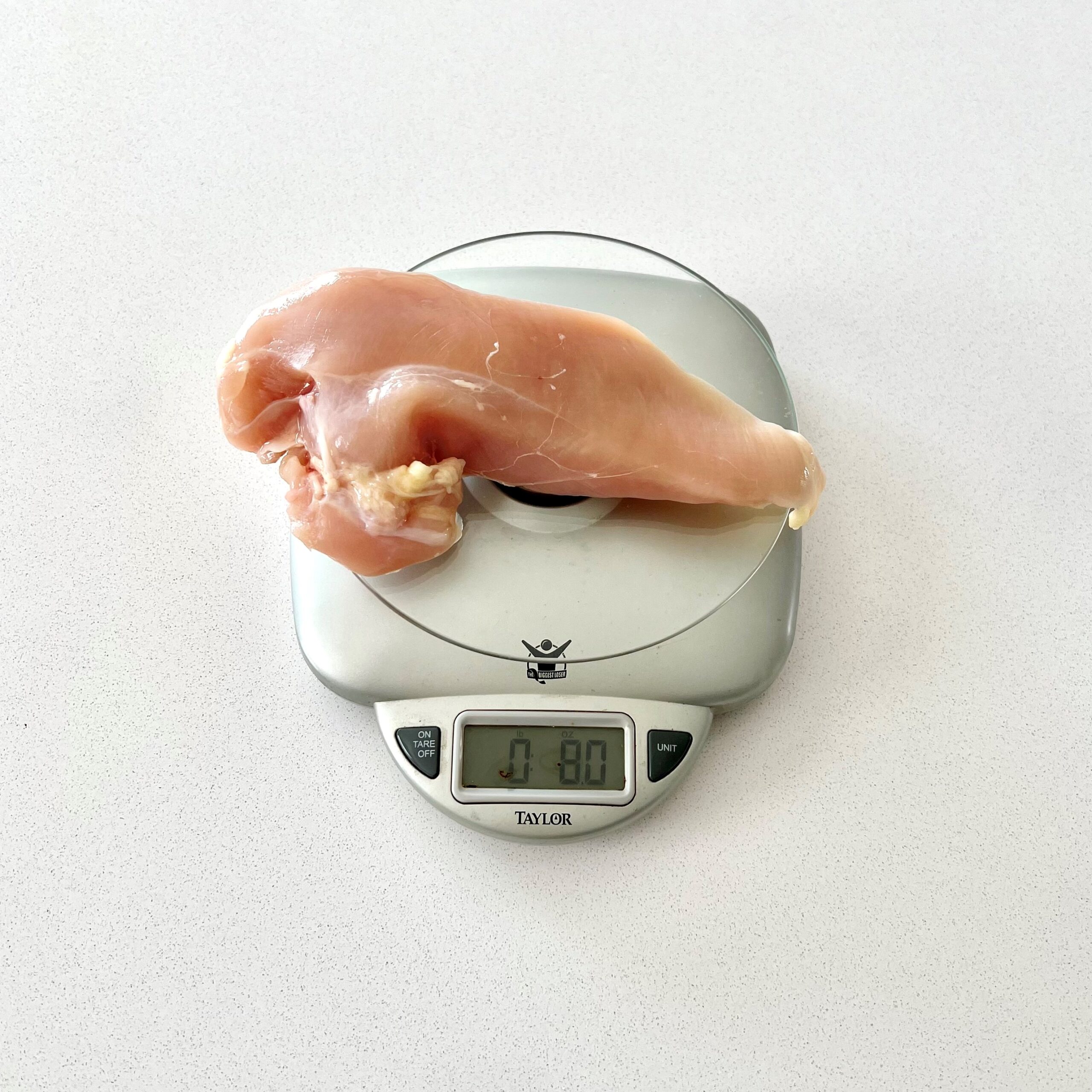
Picture by author showing the size and weight of a typical chicken breast.
This 8-ounce chicken breast would provide around 50 grams of protein.
The recommended daily allowance (RDA) of protein is only 0.8 grams per kilogram of body weight (0.36 g/lb).
For a 150-pound person, the RDA for protein is 54 grams. So, an average-sized chicken breast would almost provide enough protein for the entire day.
But remember that RDA guidelines are only the bare minimum needed to stay healthy. And higher protein intake can have significant health benefits beyond building more muscle.
Your ideal protein intake depends on your body size, exercise habits, and fitness goals.