
I Stopped Tracking Calories for 90 Days—And Kept My 6-Pack
The simple diet rules that replaced obsessive calorie tracking

By: Jeremy Fox CNC, CPT
Published: August 9, 2025

For over a decade, tracking calories and macros was a daily ritual for me. Log the food, hit the numbers, repeat.
I was convinced it kept me in elite shape. Then one day, I stopped.
It’s not that I gave up on my fitness goals. Life just happens, as they say.
But it gave me the chance to see if I could maintain my physique and strength without obsessing over every bite.
Three months later, the results surprised even me.
My History of Nutrition Tracking
My journey with calorie and macro tracking started in 2011, right after I got my first smartphone. I still remember downloading the MyNetDiary app on my iPhone 4.
At first, I just wanted to better understand how much I was eating. But over the years, I experimented with the whole gamut of diets from low-carb, high-carb, carb cycling, intermittent fasting, clean bulking, and dirty bulking.
And through it all, I meticulously tracked my macros to see how each approach affected my body.
The Obsession
What started as casual logging gradually turned into a daily habit and almost an addiction. Every gram of protein, carb, and fat was logged. Every calorie accounted for.
I even tracked my daily energy expenditure with an Oura ring and adjusted my calorie target in real-time. Sounds crazy, right?
That obsession culminated last year when I completed a 222-day streak of tracking calories in MyFitnessPal. The result was a precision transformation where I gradually cut body fat while maintaining muscle size and strength.
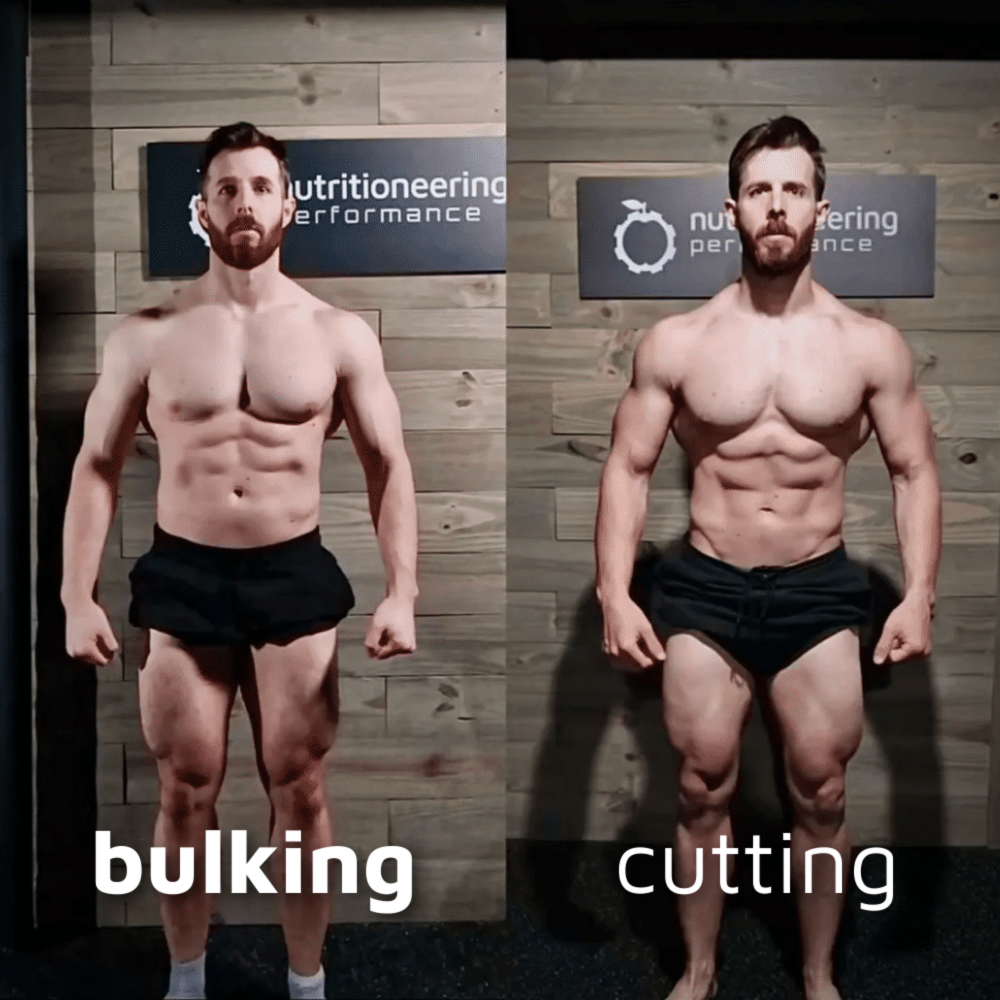
My transformation from bulk to cut with 6 months of tracking calories every single day.
The Transition
But this fixation was about more than looking good. Years of data collection and food awareness taught me a great deal about nutrition.
I developed an intuitive understanding of my calorie needs, macro targets, and the nutritional content of the foods I eat most often.
That foundational knowledge made it possible to walk away from tracking. Not because I gave up, but because I moved on to a new phase of life.
A few months ago, I became a dad. My new schedule and priorities meant I no longer had even 5 extra minutes to log my meals each day.
And honestly? It was liberating to realize I didn’t need to anymore.
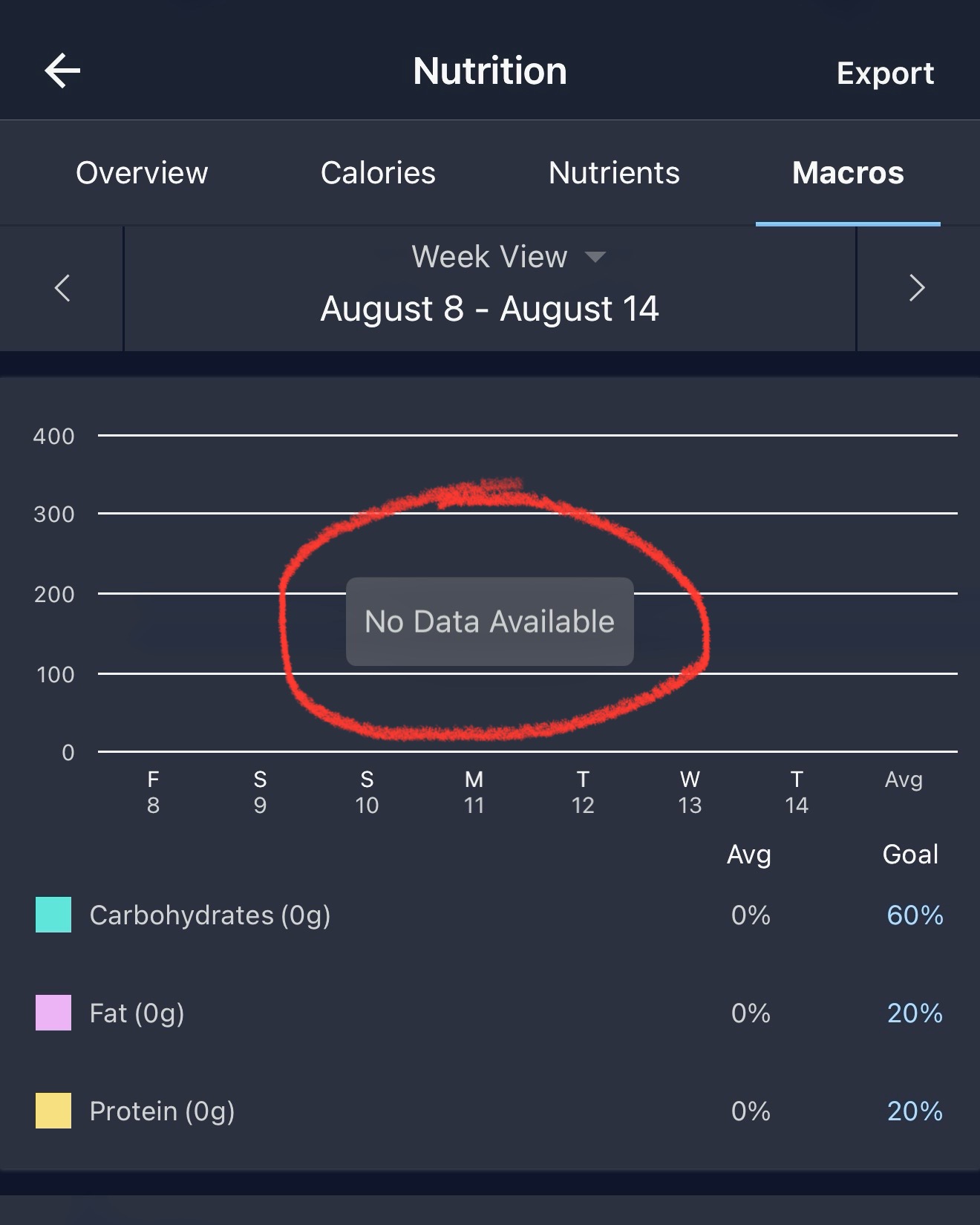
Screenshot of MyFitnessPal showing that I’m not tracking calories or logging macros.
The Framework I Follow Now
These days, my eating schedule is anything but consistent.
I still meal prep some foods in bulk, but there are no pre-planned or perfectly portioned meals waiting in the fridge.
I eat when I can. Whether it’s a short break from work or when my son finally goes down for a nap.
That said, I haven’t tossed structure out the window. I’m not reacting to hunger cues or caving in to every craving.
What I’ve adopted is a flexible framework.
This set of rules keeps me on track without the rigidity of counting or measuring.
1. I stick to whole foods at least 3/4 of the time.
If it has fewer than five ingredients and I can pronounce all of them, that’s a good start. Minimally processed foods are still the foundation of my diet, but this simple rule leaves room for convenience meals or pre-packaged snacks when time and energy are limited.
2. I lean on familiar foods.
Most of what I eat comes from a short list of staples: chicken breast, steak, rice, oats, vegetables, Greek yogurt, olive oil, fruits, berries, whey protein, and nuts. By building my diet around these familiar foods, I don’t have to think too hard or track every gram. I know what they are, how they affect me, and roughly how much I’m getting.
3. I estimate portions visually (and measure when it’s easy).
Because I eat the same staples regularly, I can eyeball things like 4 ounces of chicken or a tablespoon of olive oil with reasonable accuracy. I keep a measuring cup in my oat and rice containers to scoop consistent portions without extra effort. I still weigh calorie-dense foods like nuts when I have the chance, but I’m no longer tethered to the food scale.
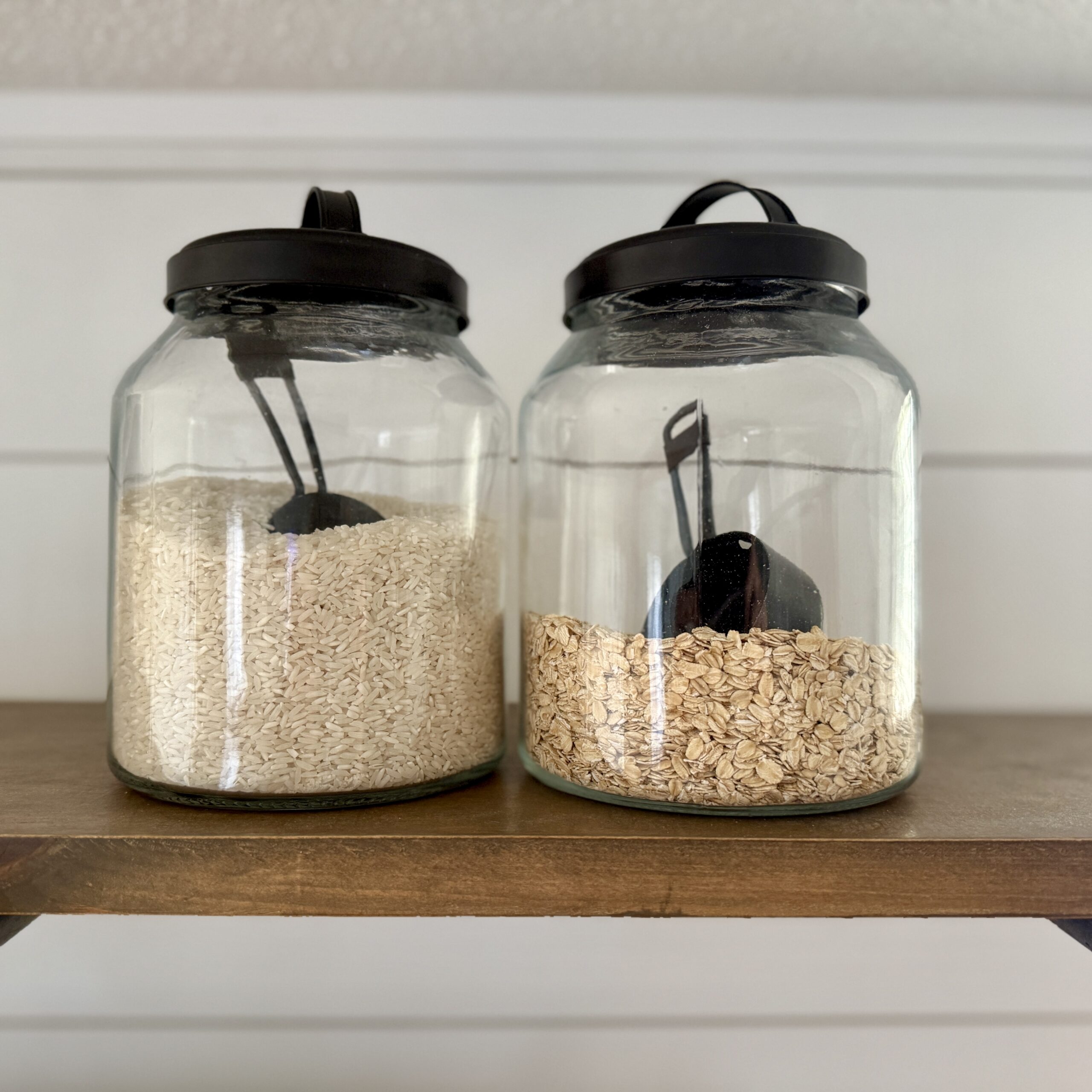
Rice and oats are two of my diet staples and some of the only foods I still measure.
4. I include protein with every meal.
It’s not always the optimal 20-30 grams, but I make an effort to get some protein each time I eat. Even if it’s just a serving of Greek yogurt or a handful of nuts. That steady trickle of amino acids helps support muscle retention and keeps me full.
5. I time my nutrition around workouts.
Nutrient timing is one diet optimization I haven’t given up. I aim to get quality protein and slow-digesting carbs before training and a mix of fast-digesting protein and carbs afterward. Even if the rest of my day is chaotic, this simple practice helps me perform better and recover well.
Overall, I’m still applying the same principles I used during my most dialed-in phases. But I’m not tallying the numbers or stressing about being perfect.
The Results Without Tracking
Despite letting go of calorie and macro tracking, I haven’t seen my body spiral out of control. Quite the opposite, actually.
Body Weight
Over the past several months, I’ve continued to weigh myself regularly just to make sure I wasn’t wasting away or ballooning up. Surprisingly, my body weight has remained remarkably consistent.
I averaged around 165 pounds and only fluctuated by about +/- 1 pound.
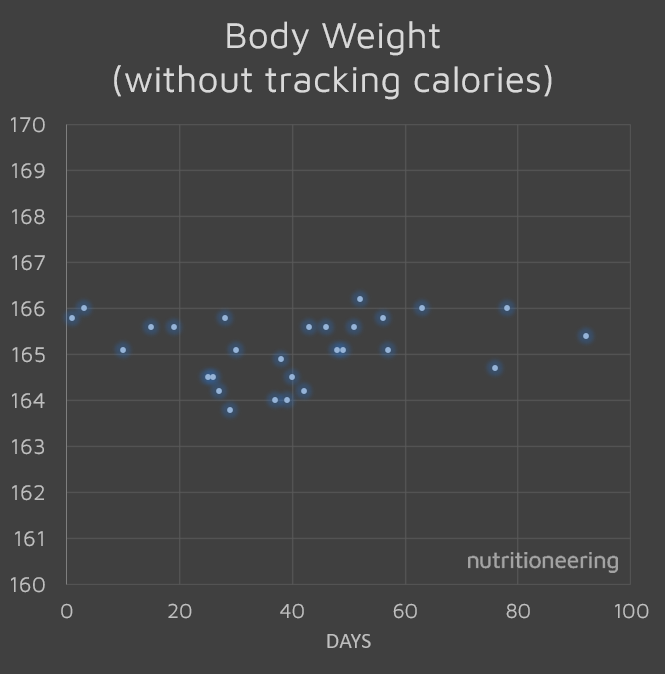
My morning body weight from May to August.
You can see in the chart above that the data points have become less frequent. That’s because I have enough weigh-ins to feel confident that my weight is stable, so I’m stepping on the scale less often.
But weight alone doesn’t tell the whole story. I also worry about how much of that weight is muscle vs fat.
Body Composition
Based on side-by-side physique photos, there’s no significant gain in fat or loss of muscle. Although my critical eye would say I’m slightly softer in the midsection.
Still, I never expected to stay this lean without tracking calories.
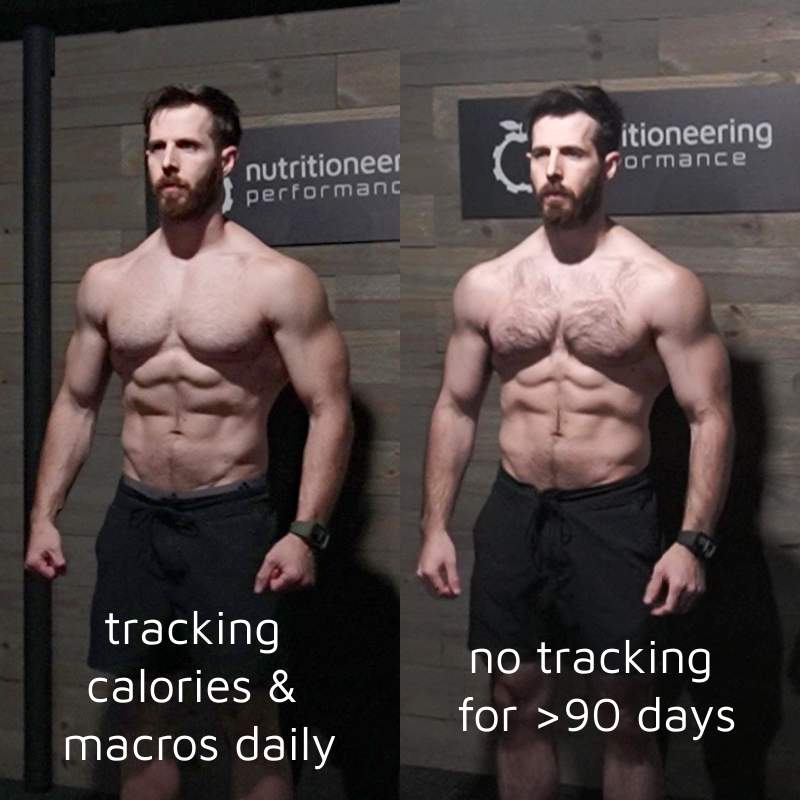
My physique at the peak of my calorie tracking versus after more than three months without logging a single gram.
Strength
Strength-wise, I did experience a temporary dip in my heavy compound lifts, particularly squat and bench, after my son was born. Sleep deprivation will do that to you.
I also drastically reduced my training duration and volume, as I covered in my post about my “dad workout routine”.
But after a few months of settling into a new routine, those lifts have rebounded and held steady.
To be clear, my goal during this time wasn’t to drop to single-digit body fat, add five pounds of new muscle, or chase a squat PR.
This phase of life is about maintaining. Holding onto the physique I built over the past few years. Staying strong and resilient while navigating fatherhood and a more unpredictable schedule.
And by that measure, this experiment has been a success.
When Tracking Is Still a Valuable Tool
Even though I stopped tracking, I still believe that counting calories and macros can be one of the most powerful tools in nutrition.
For over a decade, I logged every meal in an app, then copied those numbers into a spreadsheet the next morning. This data was invaluable in making strategic decisions about my diet and training.

A screenshot of my master tracking spreadsheet. Over 4,000 rows of data represent nearly 12 years of logging.
Looking back, though, I can now see how extreme my routine had become. It felt productive at the time, but in hindsight, I was micromanaging macronutrients.
That said, there is a middle ground between intensive tracking and blissful ignorance.
I still recommend basic calorie/macro tracking to my clients, especially when they’re starting a new diet or adjusting their goals. It’s the best way to build awareness, to see how much you’re really eating, and how those numbers line up with your goals.
Tracking is also useful when:
- You feel stuck in your progress and need to troubleshoot your intake
- You’re trying to cut body fat while maintaining lean muscle
- You’re in a muscle-building phase and want to avoid gaining unnecessary fat
- Or you’re preparing for a specific event or competition where small details matter
In those scenarios, tracking gives you data to make informed adjustments instead of shooting in the dark.
The key is knowing when to use tracking as a temporary tool, and when to trust the habits you’ve built.
Final Thoughts: Eating With Informed Intuition
These last few months have opened my eyes to the fact that I don’t need to log every calorie or gram of protein to stay in great shape.
But I should reiterate that my decisions aren’t driven by a “gut feeling” in the way conventional intuitive eating is often portrayed. I don’t simply eat whatever I want, whenever I want, and hope it works out.
Instead, I use what I call informed intuition.
Informed Intuitive Eating = making conscious decisions about food choices, portion sizes, and meal timing based on experience and observation — without the constant need to measure and track everything.
This process has shown me that you don’t have to choose between two extremes:
- Being handcuffed to a tracking app
- Or winging it on a whim and a hope
I discovered a balance where you use tracking to learn, and then carry that knowledge forward into daily life, even after you stop measuring and logging.
And you don’t have to track for over a decade like I did. Even a few weeks of quantifying your diet can be a valuable learning experience that sets you up for success.
It’s like graduating from school and entering the workforce. You no longer sit in class or cram for exams, but you still apply what you’ve learned in a productive and practical way.
For me, that’s what makes this approach sustainable. It’s qualitative, not quantitative.
Most importantly, it’s about having the experience and understanding to maintain my health and physique for the long haul.