
How to Use Carb Loading In Bodybuilding
Science-backed carb loading strategies from a bodybuilding nutrition coach.

By: Jeremy Fox CNC, CPT
Updated: August 29, 2025

Carb loading isn’t just about fueling for marathon endurance.
Bodybuilders manipulate carbs to look bigger and leaner on stage. In a close contest, getting the loading process right can mean the difference between winning first place and missing first callouts.
That’s why understanding carb loading became an essential part of my “peak week” routine. As a bodybuilder and later as a coach, I tested the most rigorous depletion and loading strategies to dial in on show day.
Now, I’ll walk you through it all in my bodybuilder’s carb loading playbook.
You’ll learn what it is, why it works, and how to apply it to your own routine to bring out your best physique.

My physique the morning of a bodybuilding contest after applying carb loading (and a couple coats of spray tan).
The Basics of Bodybuilding Carb Loading
My introduction to carb loading was booster club spaghetti feeds on Thursday nights in the high school cafeteria. The idea was to give us extra energy for Friday’s football game.
For others, the term “carb load” is used almost jokingly in reference to eating too many carbs, like Michael Scott scarfing down a plate of Fettuccini Alfredo before the 5k fun run.
But in bodybuilding, the purpose is very different, with serious stakes.
We’re not trying to run faster or play harder. We’re trying to maximize muscle size and definition while risking dehydration.
It’s more than just eating loads of carbohydrates. It’s applying nutrition and physiology to fine-tune aesthetics.
Manipulating Glycogen and Water
The entire concept of carb loading in bodybuilding is based on glycogen, a form of carbohydrate stored in the body.
If carbohydrates were a tree, glycogen would be a neatly stacked bundle of firewood.

Glycogen stored in muscle tissue can be broken down into glucose to fuel exercise, which is why people carb up before sporting events.
At the same time, it increases cellular volume, making muscles appear larger. This volumizing effect is more pronounced when glycogen is first reduced, then replenished.
The muscles act as if carbs are scarce and overcompensate by storing more glycogen.
Glycogen supercompensation: After a period of carbohydrate depletion through diet or training, the subsequent high-carb phase not only restores glycogen but also pushes muscle stores to exceed their baseline levels.
In addition, each gram of stored glycogen acts like a sponge, soaking up to 3–4 grams of water. That means filling your glycogen stores visibly increases the size of your muscles.
Real Visual Physique Changes
When glycogen levels supercompensate, it can have a noticeable effect on your muscles for two reasons.
- Muscles appear thicker and more pronounced, thanks to higher glycogen and associated water. An experiment with 24 bodybuilders showed that muscle volume temporarily increased by up to 5% when carb loading was used.
- Muscles appear more defined because water is pulled from under the skin into the muscle cells. Less subcutaneous water removes the barrier that blurs striations and veins.
So while endurance athletes carb load to fuel performance, bodybuilders carb load to enhance appearance. It’s about peaking for the stage or a photoshoot at the end of a structured fat loss phase.
How Bodybuilders Carb Load
Carb loading in bodybuilding goes beyond eating more carbs the day before the event. It’s a longer, planned-out process that starts with reducing carb intake.
Here’s how it typically works:
Glycogen Depletion Phase (5–7 days out)
- First, carbohydrate intake is drastically reduced, usually to <100 grams/day, with continued resistance training and cardio sessions to burn glycogen.
- The goal is to fully deplete the body’s glycogen stores within 3–5 days — it is not to reach ketosis.
Glycogen Loading Phase (0–48 hours out):
- Transition to high-carb intake, often 500–1,000 grams/day, while reducing activity level to conserve glycogen.
- The goal is to replenish glycogen stores for maximum muscle fullness.

The exact process can vary from one person to another due to differences in glycogen storage capacity, body water dynamics, electrolyte balance, and many other factors.
Carb Loading By The Numbers
As a bodybuilder and coach, I’ve dialed in a peak week carb loading routine through years of trial and error — experimenting with the timing and quantity of carbs to achieve the desired appearance on stage.
I’ve also studied nutrition and physiology to create structured guidelines. These general rules can serve as a starting point to shorten your learning curve.
The best way to establish your carb loading baseline is by estimating your glycogen storage capacity based on weight and body composition.
- How Many Carbs Per Day During Loading? Research suggests that 8–12 g/kg/day (3.6–5.5 g/lb/day) of carbohydrates can supercompensate glycogen stores following depletion. For a 200-pound bodybuilder, that’s 720–1,100 grams of carbs per day during the loading phase.
- How Many Total Carbs During Loading Phase? Another study found that each kilogram of muscle tissue can hold roughly 23 grams of glycogen (~10.5 g/lb of muscle). So, if that 200-pound bodybuilder has 100 pounds of skeletal muscle, he would need around 1,050 grams of carbs to fully stock his glycogen stores.
- How Big Is The Supercompensation Effect? Glycogen capacity can temporarily increase by 50–100% following depletion. And studies suggest the more you deplete your glycogen, the greater the supercompensation effect.
Therefore, that 200-pound bodybuilder may require 1,500 to 2,000 grams of carbs over the course of the loading phase.
That may look like an absurd amount of carbs, especially if you’re accustomed to low-carb diets. So I’ll put it in perspective.
Example Carb Loading for Bodybuilders
As a competitor in the Men’s Physique division, I’m not a mass monster like some of the open class bodybuilders. Nevertheless, you might be surprised how many carbs it takes to replenish my glycogen supply, especially with supercompensation.
Let’s break it down with an example.
Here are my stats entering a typical peak week according to an InBody scanner:
- Body Weight: 170.4 lbs
- Body Fat: 7.0%
- Lean Mass: 158.5 lbs (includes bones, skin, organs)
- Muscle Mass: 91.5 lbs (tissue where glycogen can be stored)
Using the 10.5 grams per pound of muscle mass guideline, my body should be able to hold approximately 960 grams of glycogen.
Additionally, we can assume that the amount increases by at least 50% with supercompensation following proper depletion.
Therefore, a conservative calculation for my total carb loading quantity is 960 grams x 1.5 = 1,440 grams.
Based on a loading rate of 3.6–5.5 grams per pound of body weight per day, I should aim for 610–940 grams of carbohydrates daily. That means I will need 36–48 hours to fully carb load.
If you don’t know your skeletal muscle mass, start with the grams per pound method, then multiply by the number of days you plan to carb load. Ex. 170 lbs x 4.5 g/lb x 1.5 days = 1,150 grams.
Here’s the depletion and loading protocol I used to achieve my best stage-ready physique:
- Sunday-Thursday: <100 grams carbs
- Friday: 800 grams carbs
- Saturday: 400 grams carbs

My physique following the carb loading protocol outlined above.
After an extensive 5-day depletion period, my carb load commenced the day before the contest. That first day involved eating roughly 100 grams of carbs every couple of hours.
I ate mostly simple starches like rice and potatoes, which work best for replenishing glycogen.
Then, the morning of the contest, I scaled back to 30–50 grams of carbs every hour leading up to pre-judging. Most of these carbs were low-volume sugars, which rapidly refill glycogen without filling your belly.
This approach allowed me to maximize glycogen storage while monitoring my physique to avoid “spilling over” or washing out definition.
Water & Sodium Loading
Many bodybuilders also manipulate their water and sodium intake to achieve the highest degree of muscle definition and detail.
I’ve had consistent results from modest water loading and depletion, but sodium manipulation is much less predictable.
Here’s how it generally works:
Water/Sodium Loading Phase (5–7 days out)
- First, water intake is drastically increased to about double your regular intake. So if you usually drink 1 gallon of water a day, you would drink 2 gallons.
- Some bodybuilders also increase sodium intake during this phase.
- The goal is to get your body used to flushing out more fluid.
Water/Sodium Depletion Phase (0–48 hours out):
- Ramp down water intake as carb intake ramps up. Usually 1 gallon or less the day before the contest, and sipping water as needed on show day.
- Some bodybuilders reduce sodium intake during this phase.
- The goal is to flush out excess body water and allow glycogen to absorb the rest. But you must tread carefully to avoid becoming overly dehydrated.
The idea behind this water loading strategy is that the excretion mechanism takes a couple of days to respond to hydration levels. When you reduce water intake, your body continues to flush out excess water, giving you a dry look for a brief period.
Sodium is an electrolyte that plays a crucial role in maintaining the body’s water balance. High sodium intake generally causes fluid retention, while decreasing it helps release excess water.
The one-two punch of water and sodium loading can result in reduced extracellular water (think under the skin) and increased intracellular water (within the muscles).

Image depicting intracellular vs extracellular water.
When used in conjunction with carb manipulation, water and sodium loading can lead to remarkable short-term transformations.
Pitfalls of Depletion & Loading
These intense depletion and loading strategies can work well. But they have some downsides.
Dangerous Dehydration
One of the biggest risks faced by bodybuilders is posed by water manipulation methods used to achieve a “dry” look.
Depleting sodium and water can have unintended consequences, such as dangerously low potassium levels that often lead to severe muscle cramps.
The stakes become higher with the now common practice of misusing prescription-grade diuretics to flush out even more water.
Unfortunately, when combined with other dehydration techniques and in the absence of medical supervision, diuretic drugs can cause life-threatening heart conditions and even paralysis.
That is why I do not recommend sodium manipulation or the use of potent diuretics.
Gastrointestinal Issues
Another common issue with carb loading in bodybuilding is stomach discomfort.
In well-trained, muscular athletes, replenishing glycogen can require thousands of grams of carbs. Yet many bodybuilders can’t begin loading until after they weigh in, typically about 24 hours before the contest.
Your digestive tract is like a checkout lane on Black Friday. When you cram all those carbs and calories in such condensed space, something’s gotta give!
Alternative Carb Diet Strategies
The carb depletion and loading method produces the most transformative physical effect. I’ve actually seen my weight fluctuate by an incredible 17.6 pounds in just one weekend.
But the extreme lows and highs are physically stressful, mentally draining, and just not practical. Not to mention, it comes with a greater risk of something going wrong.
That’s why a small subset of bodybuilders opt for more conservative carb loading strategies.
3–3 Carb Loading
Sometimes slower is better. In this case, 3–3 carb loading represents three days of carb depletion followed by three days of gradual repletion.
In practice, it looks something like this:
- Monday-Wednesday: <100 grams carbs
- Thursday-Saturday: 400–600 grams carbs
Spreading the carb load out over 72 hours reduces the gastrointestinal stress. However, it may not be ideal for bodybuilders who need to cut down to make weight.
Carb Cycling
Instead of swinging between extreme lows and highs during peak week, carb cycling applies those principles every week in a more balanced and sustainable way.
Here’s how it works in general:
- Low Carb Days (< 30% carbs): Reduce carbs and calories to burn off some glycogen and encourage the body to transition to fat as fuel.
- Moderate Carb Days (30–50% carbs): Moderate carbs to fuel lifting and recovery.
- High Carb Day(s) (50–60% carbs): Typically one high-carb, high-calorie day (aligned with intense workouts) to top off glycogen stores, boost metabolism, and provide a break from restriction.
Carb cycling also helps you avoid the “flat” look that comes from long-term low-carb dieting. Instead, you stay fuller and more muscular while still leaning out, which is especially useful during extended cutting phases.
After I stepped away from competitive bodybuilding, I shifted to a carb cycling approach that kept me looking and feeling my best without the rollercoaster of depletion and loading.

My fat loss results using carb cycling instead of excessive restriction and loading.
Consistent High Carbs
It’s also important to consider that carb loading is not a mandatory diet plan for peak week. A 2018 survey found that at least 1 in 20 bodybuilders doesn’t use carb manipulation before a contest.
Similarly, many bodybuilders in the 70s and 80s kept carbs relatively high throughout their contest prep. Golden era great, Mike Mentzer, admitted to eating pancakes and ice cream every day of his peak week!
Instead of carb deprivation and excess, the focus is on following a balanced diet and using a calorie deficit to gradually get the body into contest shape.
This balanced approach removes the burden of depleting carbs and minimizes gastrointestinal issues associated with loading. It also reduces anxiety about getting the timing just right.
I tested a high-carb diet during one of my recent cutting phases and was surprised by just how lean I got without any carb manipulation measures.
Not feeling depleted or deprived by low-carb days proved to be an incredibly sustainable way to lose fat. With a constant high-carb diet, I looked full and strong every day of the week.
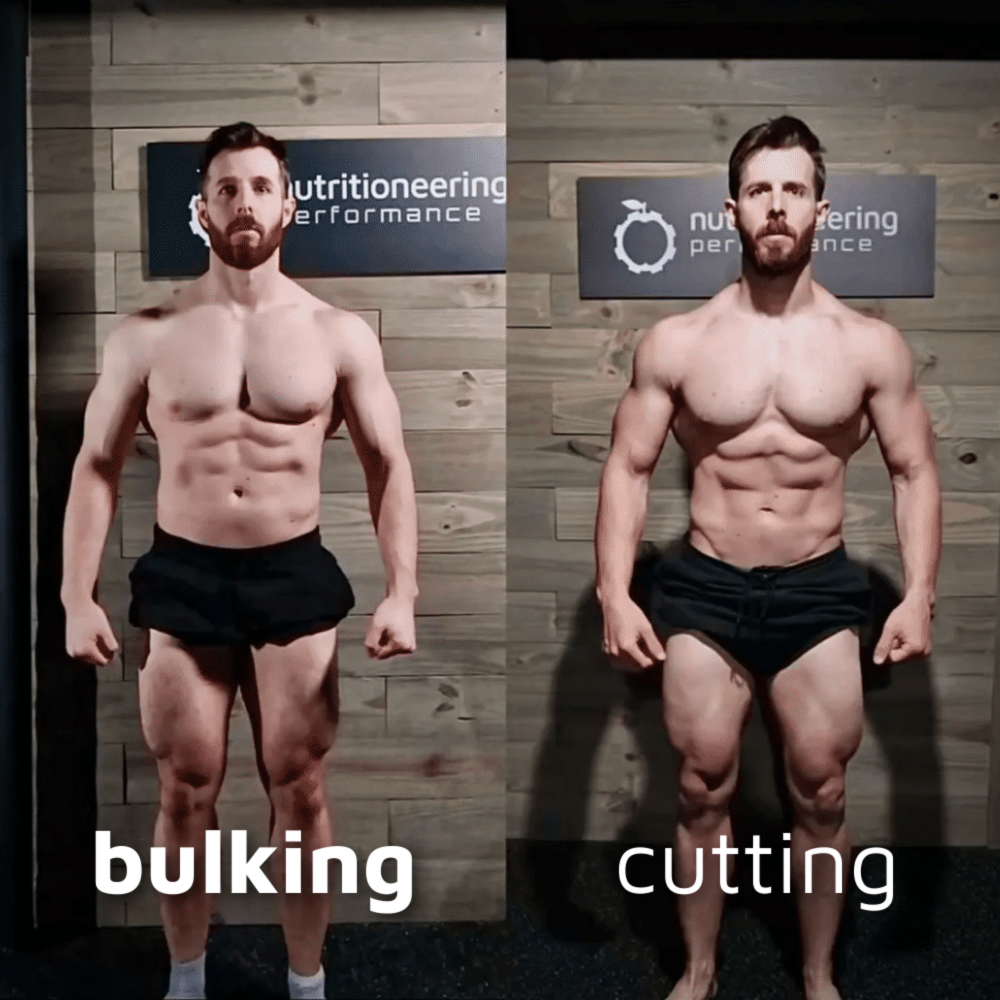
I was eating a diet consisting of 60% carbs every day in both photos; the only difference was my calorie intake and cardio routine.
Carb Loading Key Takeaways
Carb loading in bodybuilding won’t transform a bad physique into a great one. But when you have the muscle, conditioning, and discipline in place, it can be the finishing touch that gives you that extra 5% edge.
I’ve experimented with carb loading at every level — from the extreme depletion and supercompensation protocols to the more practical carb cycling methods.
I learned there is a time and place for each strategy.
- Carb Loading: Opt for a depletion and loading if you need maximum glycogen supercompensation and definition for a contest or photoshoot.
- Carb Cycling: Use weekly cycles of low, medium, and high-carb days for less dramatic swings and more consistent results during cutting and recomposition phases.
- Constant Carbs: For sustainable cutting, bulking, or maintenance phases, use a balanced macronutrient ratio with a strategic calorie target.
The truth is, there isn’t a single “best” way to carb load. The ideal approach is the one that aligns with your goals, lifestyle, and experience.
For a competitor, that might mean a full depletion and reload. For someone who just wants to look and feel their best in the gym, consistency with carbs and calories may be all you need.
At the end of the day, carb loading is just a tool. Used wisely, it can help you reach your peak. Misused, it can leave you bloated and frustrated.
My advice? Experiment and find the balance that works for you.
👉 If you want a structured place to start, I’ve put together a 7–Day Carb Cycling Cheat Sheet that walks you through how to set up your own high, medium, and low-carb days. You can download the free PDF on my website and start applying these principles right away.