
The Real Reason You’re Not Losing Weight In a Calorie Deficit
Your metabolism isn’t broken—here’s how to get back on track.

By: Jeremy Fox CNC, CPT
Updated: October 30, 2025

You just started a new weight loss plan. And as the pounds start dropping, your excitement builds.
But then you hit the inevitable plateau. You can’t seem to lose any more weight.
Optimism turns to frustration, and you question whether calorie deficits even work. It’s a common issue that somehow evades a clear explanation.
As a certified nutrition coach, I’ve talked with hundreds of clients who felt like their metabolism was broken.
The truth is, your body doesn’t suddenly stop following the laws of thermodynamics.
Weight loss stalls because something in your process has changed. And it’s secretly sabotaging your results.
In this article, I’ll unpack the most likely reasons you’ve stopped losing weight even when you’re eating less. More importantly, I’ll show you how to finally make progress again.

My personal weight loss transformation and what’s possible with a strategic diet and workout routine.
When a Calorie Deficit Isn’t Really a Deficit
Let’s start by looking at the biggest culprit of all, the false calorie deficit.
On paper, weight loss is simple. Burn more calories than you consume, and your weight goes down.
Calories In < Calories Out = Weight Loss… Right?
Unfortunately, real life is messy, and the equation isn’t always that clean. You may think you’re eating less and burning more, but the math doesn’t add up.
So the most common reason you don’t lose weight while “in a deficit” is because you’re not actually in one!
Eating More Than You Realize
You don’t have to be binging on pizza and ice cream to overshoot your calorie target. Even slight inaccuracies can close the gap between deficit and maintenance.
If you’re “eating clean” but not tracking, it’s easy to underestimate portions. A tablespoon of peanut butter here, an extra drizzle of olive oil there. Those little add-ons add up to hundreds of calories.
Even when using calorie-tracking apps like MyFitnessPal, inaccuracies can creep in because:
- Food entries are often user-generated and unverified.
- Restaurant menu items are notoriously off.
- And nutrition labels can legally vary by up to 20% from actual calorie content.
So even if your log looks perfect, the real total may be way off.
And let’s be honest — very few people log everything. (Except that one time when I logged every calorie for 222 straight days).
Condiments, dressings, cooking oils, drinks, candy, and even chewing gum can fly under the radar and can push you out of a deficit without realizing it.

Burning Fewer Calories Than You Think
The other side of the equation is calorie expenditure, and this is where you might be overestimating your energy needs.
That 45-minute treadmill session you thought earned you a cheeseburger actually only burned 190 calories.
Even high-end fitness trackers like the Apple Watch and Fitbit can overstate calorie burn. These devices use population-based linear fit trendline formulas that don’t work well if your metabolism burns fewer calories than average.
Just as some people are taller or shorter, there is also genetic variation resulting in faster or slower metabolic rates. I’ve written about the concept of metabolic types many times, and its surprising effect on your calorie needs.

The Compounding Effect
When you combine seemingly small underestimations of calorie intake with overestimated expenditure, your “500-calorie deficit” can vanish or even flip into a surplus.
And when that happens, the scale remains stagnant.
Before blaming hormones or bad genetics, take an honest look at your calorie balance. You may not need a more aggressive diet — you might just need more accurate data.
Metabolic Adaptation: Why Your Metabolism Fights Back
One of the lesser-understood concepts in weight loss is metabolic adaptation, also called adaptive thermogenesis. The idea is that when you cut calories too much or for too long, your body slows down energy expenditure as a protection mechanism.
From my years coaching bodybuilders and analyzing nutrition data, I’ve seen this phenomenon plain as day. You can stay on a “perfect” deficit for weeks, only to hit a brick wall.
It’s like a football team running the ball on every down. Pretty soon, the defense adjusts by putting more players in the box to stop the run.
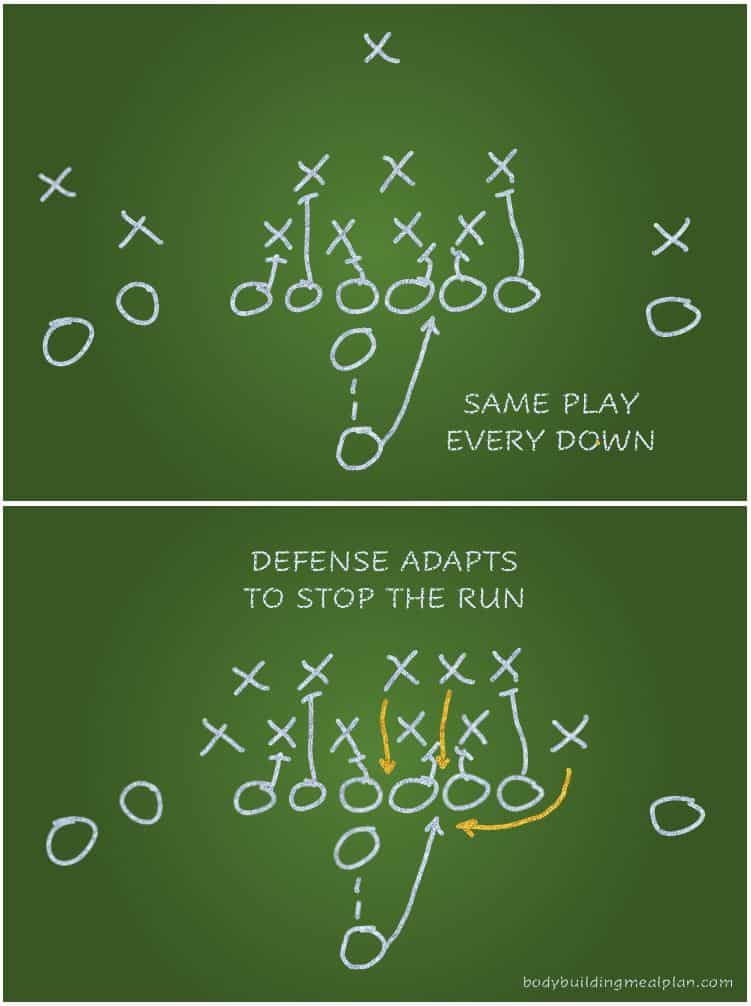
Metabolic adaptation is like your body’s defensive coordinator. It changes the game plan to react to dietary patterns. A calorie balance that resulted in forward progress for a while no longer works, and your weight stops dead in its tracks.
It’s important to understand that this process has two primary components: muscle loss and deficit-induced downregulation.
1. Muscle Loss and Metabolic Adaptation
When you lose body weight, some of it inevitably comes from muscle tissue. Since muscle is more metabolically active than fat, losing it lowers your basal metabolic rate (BMR).
In other words, each pound of lean mass you lose means you can survive on fewer calories.
I equate it to throwing gold bricks out the car window to get better gas mileage. Dropping muscle conserves energy, but it comes at a cost!
In a study of obese individuals undergoing massive weight loss, researchers observed declines in metabolic rate that directly correlated with losses in muscle mass. The more lean mass lost, the larger the drop in metabolic rate, which reduces energy expenditure.


Muscle loss definitely plays a role. But it actually doesn’t explain the full scope of metabolic slowdown many people experience, especially if you intentionally preserve muscle through training and a high protein diet.
And that brings us to the second component.
2. Adaptive Thermogenesis Based on Deficit Magnitude
Beyond just losing muscle, your body sees a calorie shortage and signals to downregulate energy expenditure through a separate mechanism. In the car analogy, it’s like shifting into a lower gear when RPMs and speed drop.
This energy conservation can manifest as decreased resting metabolism and reduced total daily energy expenditure (TDEE).
Basically, your body becomes more economical with energy usage.
In a tightly controlled study, researchers placed overweight subjects on caloric restriction and measured TDEE for 6 weeks. After just 1 week, they measured a decline in total energy expenditure of about 180 calories per day, well beyond what they predicted based on mass loss alone.
The researchers also concluded that the greater the deficit, the greater the metabolic pushback is likely to be.

This mechanism makes sense. A large deficit screams, “We’re in crisis mode; we need to conserve energy!” And your body responds by:
- Lowering baseline energy needs
- Increasing hormonal signals that promote conservation (lower thyroid, elevated cortisol)
- Reducing spontaneous activity or fidgeting (NEAT)
- Improving mitochondrial efficiency (i.e., do more work with fewer calories)
Therefore, while muscle loss accounts for a baseline slowdown, much of the hidden adaptation (especially in athletes who maintain their muscle mass) is a reactive downregulation to the energy shortage itself.
Together, this data shows that adaptive thermogenesis is real and quantifiable, although it can vary between individuals. Some people will experience minimal adaptation, while others may see a reduction of 100–200 calories in their daily energy expenditure.
Sleep, Stress & the Nervous System: Why “Just Dieting” Isn’t Enough
You can dial your diet and workouts, and still stall out on the scale. I’ve seen it with clients and in my own training cycles when life gets hectic.
Sometimes it’s not just about energy in vs energy out. Internal and external stressors can also significantly affect your progress.
Here’s how your nervous system and recovery can be almost as important as energy balance.

Sleep Restriction Blunts Fat Loss
Sleep deprivation doesn’t just mess with your mood and energy. It has negative effects on body composition and metabolic health.
In a controlled trial, overweight adults following a calorie deficit were split into a group with regular sleep and a group that had sleep restricted by about an hour per night for five nights a week. Both groups lost weight, but the sleep-restricted group lost less fat and more muscle, despite having equivalent caloric intake.
There are several physiological pathways through which poor sleep or persistent stress can counteract dieting, according to a 2022 study:
- Sleep restriction is linked to higher evening cortisol levels and reduced insulin sensitivity, which can favor fat storage and make it harder to metabolize carbohydrates.
- Hunger hormones shift unfavorably. Ghrelin (which stimulates hunger) rises, and leptin (which signals feeling full) falls when sleep is limited. That combination leads to increased appetite, particularly for high-calorie, carb-dense foods.
Nervous System Balance & Energy Conservation
Your autonomic nervous system is made up of the sympathetic (fight-or-flight) and parasympathetic (rest-and-digest) branches. Each plays a significant role in energy regulation, but chronic stress pushes the body into sympathetic overdrive, which:
- Drives up basal cortisol
- Impairs recovery from training
- Reduces the efficiency of digestion and nutrient absorption
- Encourages the body to conserve energy via reduced movement and subconscious rest
These are the same energy crisis symptoms triggered by aggressive calorie restriction. Combined, they cause your metabolism to downshift into an even lower gear.
Signs You’re Getting Sabotaged by Poor Recovery
Here are some red flags I watch for (and coach clients to monitor) when sleep and stress might be the hidden culprit:
- Persistent hunger or cravings, even when calorie intake seems adequate
- Mood swings, irritability, or poor focus
- Sluggish workouts, slow recovery, and longer soreness
- Stalled fat loss, but no change in diet or training
- Unexplained water retention or bloating, especially around the midsection
- Poor HRV (heart rate variability), elevated resting heart rate, or trouble sleeping in deeper phases
If these signs appear, it’s best to prioritize recovery before intensifying the diet.
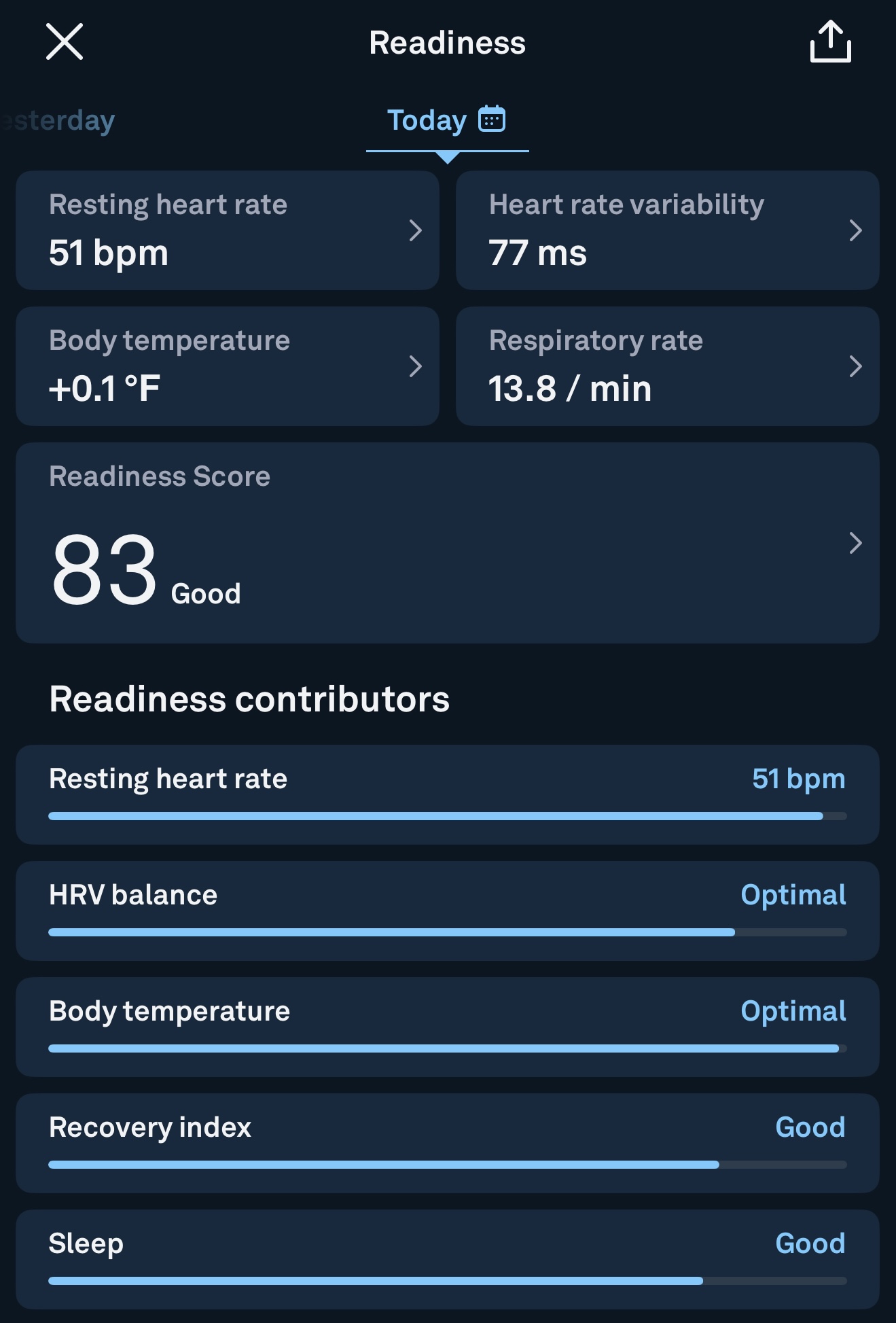
I wear an Oura ring for tracking sleep as well as recovery metrics such as resting heart rate, HRV, body temp, and more.
Unrealistic Expectations Limiting Real Results
We all tend to overestimate what we can achieve in a month and underestimate what we can achieve in a year.
Our sense of what “normal” progress looks like is warped.
You see dramatic before-and-after photos on social media, “biggest loser” challenges on TV, and promises of losing 30 pounds in 30 days from supplement marketing.
What you don’t see are the crash diets, rebound weight gain, and side effects that follow.
As a coach, I’ve worked with hundreds of clients who felt discouraged after losing “only” a few pounds in their first month. In reality, they were right on track for sustainable fat loss if they had just stuck with it.
What Realistic Progress Actually Looks Like
For most people, a good rule of thumb is to lose around 1% of your total body weight per week.
- That’s about 2 pounds per week for a 200-pound person,
- Or roughly 8 pounds per month.
On the surface, that may seem too slow. But slow and steady is exactly the pace that protects your muscle mass, keeps your metabolism stable, and makes the results stick.
My research has shown that more gradual weight loss combined with sustainable habits yields better long-term results than rapid cuts with extreme deficits.
I recently put this to the test in a case study, where I lost weight very slowly and consistently for 6 months while maintaining nearly all my muscle mass.

My results from a slow and steady weight loss approach. I “only” lost 10 pounds in 6 months, but I didn’t lose muscle or crash my metabolism.
So while you might want to see the scale drop by 10 pounds in two weeks, you’re better off taking the slow lane.
Why the Scale Can Be Misleading
The scale is a tool, but it doesn’t tell the whole story. It measures total body weight, not what that weight is made of.
When you start training, eating better, and recovering properly, several things can happen simultaneously:
- Building muscle while burning fat can cancel out scale movement.
- A high-carb day can replenish glycogen stores and add a few pounds of scale weight overnight without changing your body fat level.
- Dehydration/rehydration due to water intake and electrolyte balance can also cause temporary water shifts that mask fat loss.
It’s why I tell clients not to obsess over a single weigh-in. Look for trends, not snapshots.
A better approach is to track weekly averages, take progress photos, and use measurements like waist circumference or body fat percentage. Often, your body is changing faster than the scale shows.
The Psychology of Patience
Our brains crave short-term rewards. We live in a world built for instant gratification. But sustainable fat loss is built on long-term consistency.
When results don’t show up as quickly as expected, your motivation drops. Then, you convince yourself that the plan isn’t working and either double down on cutting more calories or give up entirely.
Understanding that change is rarely linear is essential for long-term success. Instead of panicking at the first sign of a plateau, stay calm and ride out the ups and downs.
Patience is what separates people who succeed temporarily from those who transform permanently.
However, you also don’t want to sit around forever and wait for weight loss that’s never going to happen. Sometimes being stuck means your system is broken and needs to be changed.
Take Control of Your Energy Balance
If you think you should be losing weight but it still isn’t happening, it’s time to tighten up your process.
Here’s how to get your energy balance back under control and create a consistent calorie deficit:
- Spot check calorie intake. Use a calorie tracking app (like MyFitnessPal or Cronometer) for a few weeks. You don’t have to track calories every single day for months. Just long enough to recalibrate your awareness. Log everything that goes into your mouth to account for those hidden calorie traps.
- Weigh and measure key foods. Get a kitchen scale to weigh calorie-dense foods like rice, oats, peanut butter, and nuts for greater accuracy compared to the “eyeball” method.
- Audit your calorie burn. Use an accurate TDEE calculator like this one. Or invest in a wearable fitness tracker to get a reasonable approximation of your average daily energy expenditure. If you’re not losing weight, despite consistently eating below your “calories out” number, try focusing on a different metric.
- Verify your deficit through data. Your bathroom scale is a feedback loop when used properly. If your average weekly weight isn’t dropping after two weeks at a particular calorie target, reduce intake by 200–300 calories per day or add a bit more activity. Adjust gradually and wait another two weeks before making further changes.
- Stay consistent. Weight loss doesn’t happen in a single workout or meal. It’s the cumulative result of your habits that determines progress. The more consistent you are, the easier it becomes to see what’s really working.
By following these steps, you’ll eliminate guesswork and replace “I think I’m in a deficit” with “I know I am.”
And once your calorie balance is under control, you can start optimizing the other factors, including rest and recovery.
Final Thoughts: When the “Deficit” Isn’t Working
If you’ve been dieting for a while and still not seeing the scale move, don’t panic — there’s almost always a logical explanation.
Sometimes, it’s a false deficit caused by eating more or burning less than you realize. Other times, it’s metabolic adaptation (your body gradually adjusting to fewer calories by becoming more efficient). Add in stress, poor sleep, and unrealistic expectations, and even the most disciplined plan can seem broken.
But here’s the truth: your body still follows the rules of energy balance. The key is to work with your metabolism, not against it.
If you’re ready to pinpoint the right target and break through your plateau, try my free calorie deficit calculator. It factors in your body composition, activity level, and metabolic type to give you an accurate daily calorie goal — not just a generic estimate.
👉 Calculate your calorie deficit here and get your weight loss back on track.