
How Becoming a Dad Redefined My Workouts
What I do now to stay fit as a father with little time to train.

By: Jeremy Fox CNC, CPT
Updated: July 22, 2025

I chug my pre-workout, open the Nanit app to keep an eye on the crib, and head down to the basement gym.
No warm-up routine. Just enough time to move some weight and start the day feeling like I’ve done something for myself.
As a nutrition coach and lifelong weightlifter, fitness has always been part of my identity. But becoming a dad introduced a million new moving parts.
The truth is, fatherhood didn’t just change my workouts — it changed my definition of progress.

With my son, hours after becoming a dad.
How I Trained Before Fatherhood
Up until a few months ago, my workouts were as consistent as a cuckoo clock.
Everything was scheduled around training. Perfectly timed meals, 8–9 hours of sleep, carb cycling, and deload weeks — they all coordinated with the training plan.
For years, I followed a strict 6-day resistance training split. I’d go months without missing a day.
Each session lasted anywhere from 45 to 90 minutes, and I added cardio a few times a week on top of that.
Training wasn’t just my hobby. It was my lifestyle.
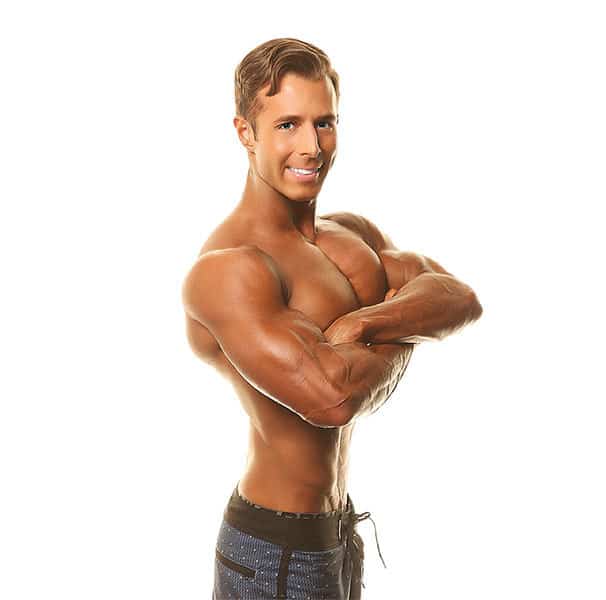
This was me at my peak as a competitive physique athlete.
I lived for continuous self-improvement. Heavier weights, more reps, bigger muscles, less fat. Progress was trackable, tangible, and deeply satisfying.
And while it worked for me at the time, I didn’t realize just how much of my self-worth had become tied to the structure and sheer volume of training.
That version of me had the time, energy, and freedom to chase physique perfection.
Fatherhood would change all of that. These days, I’m lucky if I even get started before cries erupt from the monitor.
When Reality Hit
The moment it all changed for me wasn’t in the gym — it was in a dim hospital room, staring at the numbers on my sleep tracking app.
1 hour and 42 minutes.
That’s how much sleep I got the second night in the hospital after my son was born.
During that first week, I averaged only 4 hours of rest per night. My sleep schedule and my training routine vanished — overnight.
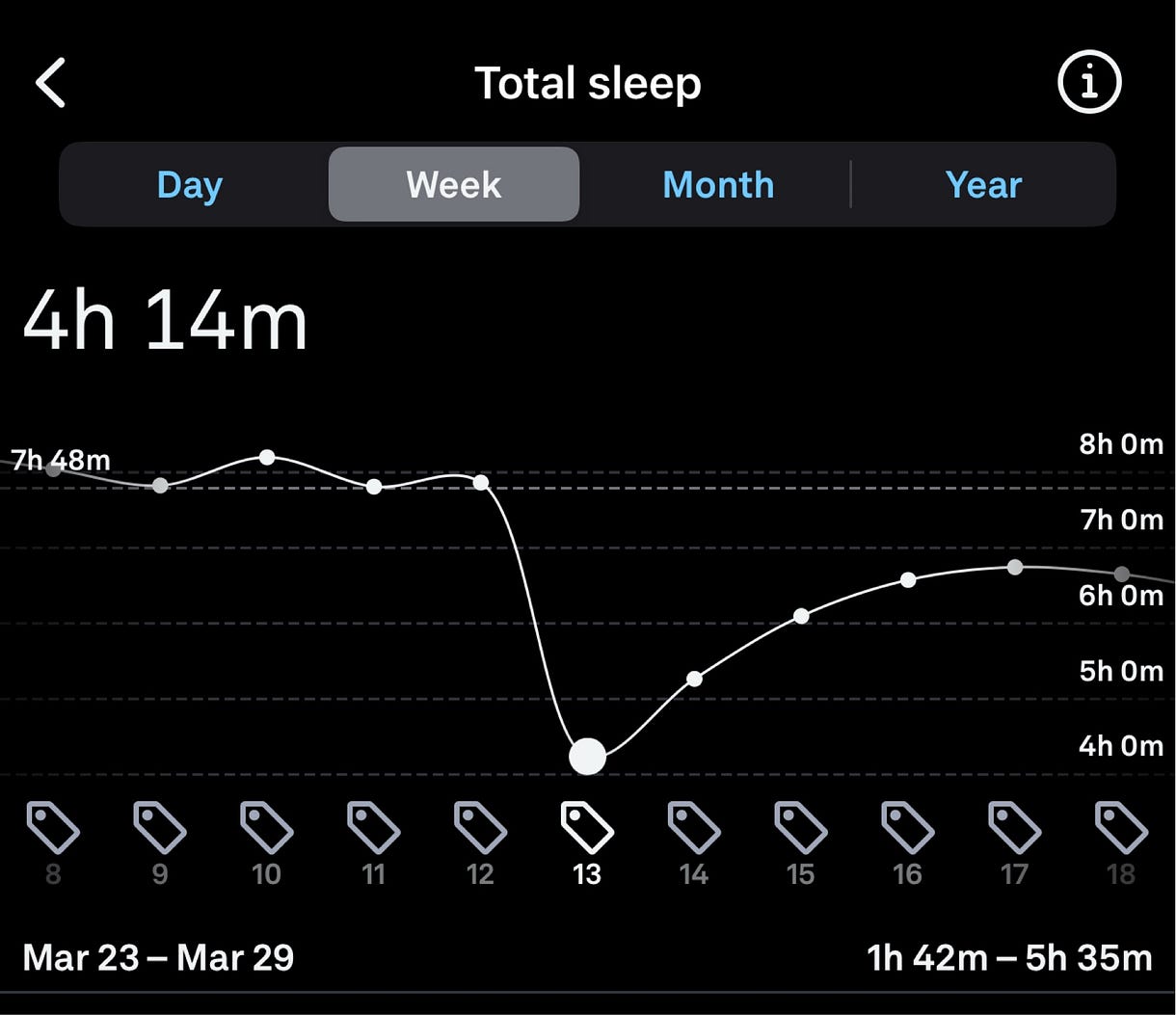
Screenshot from my Oura Ring app showing that I was “in the trenches” of sleep deprivation.
Once we brought him home, everything revolved around feeding schedules, diaper changes, and bottle sanitation. I’d spend 90 minutes helping feed, cleaning bottles, and assembling pump parts — only to do it all over again before I’d even had a chance to catch my breath.
There was barely time to eat or shower, let alone train.
For a while, it felt like I was losing everything I’d worked so hard to build. The struggle was just as much mental as physical.
My identity as a bodybuilder seemed like it was being swept away in a raging river of sleepless nights and survival-mode days.
The hardest part wasn’t even missing workouts or losing hard-earned muscle. It was letting go of the version of myself that training had kept anchored for over two decades.
My structure was gone. But slowly, I started to adapt.
I stopped trying to cling to my old routine and started going with the flow, building something that worked in my current situation.
Not “ideal,” but real.
And that shift became the framework for everything that followed.

The Dad Bod Workout Plan
These days, my training doesn’t follow a strict schedule. There are no set workout days.
I train whenever I can slip downstairs for a quick jam session while the baby sleeps or my wife has things covered.
My current routine is loosely based on a 5-day “bro split,” which involves working legs, chest, back, shoulders, and arms on separate days.
But instead of building my week around the gym, the gym now fits into the tiny gaps in my life. It went from the bricks to the mortar.
To make the most of short windows— sometimes just 20 minutes — I do the following:
- Prioritize compound movements to work multiple muscles at once
- Keep rest periods under 60 seconds to minimize downtime
- Double up with supersets to work one muscle while another rests
- And group by equipment to reduce time spent setting up or moving weights
Now, let’s break down the details of each individual training day, including the specific exercises I choose, the number of sets I do, and the rationale behind the workout structure.

My workout log book.
Leg Day
- 5 sets of barbell back squats (60 sec rests)
- 5 sets of barbell calf raises (30 sec rests)
Leg day used to be my longest workout. Now it’s one of the shortest. Still, my legs are wobbling as I ascend the stairs afterward.
Instead of training quads, hamstrings, and glutes with individual exercises, I hit them all with focused sets of squats at an 8–9 out of 10 effort (RPE), or 1–2 reps in reserve (RIR).
Then use the same setup for barbell calf raises with just enough time to write down my reps between sets. The rapid-fire approach saves time and makes it more challenging for stubborn calf muscles.
This entire workout takes place inside the power rack. No wasted movement.
Chest/Triceps Day
- 5 sets of barbell bench press (60 sec rests)
- 5 sets of close-grip bench press (60 sec rests)
- 4 sets of dumbbell flies (45 sec rests)
- 4 sets of cable pressdowns (30 sec rests)
I set up the bench and bar in my power rack for the first two compound exercises: conventional and close-grip bench press.
Then I move on to isolation exercises for chest and tris. The easier the exercise, the shorter the rest period. It reduces time without cutting down your strength.
Back/Biceps Day
- 5 sets of pull-ups (60 sec rests)
- 4 sets of barbell rows (45 sec rests)
- 5 supersets of spider curls and cable curls (45 sec rests)
Before becoming a dad, I tested a pull-up-only workout routine, so I’m no stranger to minimalist back training.
Now I also do barbell rows and tack on 5 supersets to blast my biceps. Simple, yet my back is still sore the next day.

Screenshot of my back and bicep workout details from the Apple Fitness app.
Shoulder Day
- 3 sets of barbell overhead press (60 sec rests)
- 4 supersets of dumbbell lateral raises and barbell front raises (60 sec rests)
- 4 supersets of dumbbell rear delt flies and barbell upright rows (60 sec rests)
- 5 sets of crunches sprinkled in between exercises
My shoulder day hits all three deltoid heads with basic barbell and dumbbell exercises. I multitask during rest periods by knocking out a few sets of abs.
Arm Day
- 4 supersets of barbell curls and JM press (45 sec rests)
- 4 supersets of dumbbell incline curls and dumbbell incline skull crushers (45 sec rests)
- 4 supersets of cable preacher curls and cable pressdowns (45 sec rests)
To keep it short and intense, this entire workout involves supersetting biceps and triceps.
Cardio Workouts
My current schedule doesn’t allow for dedicated cardio workouts. Instead, I fire up my fitness tracker anytime I’m able to move my body.
- Pushing the stroller around the block? Start workout
- Mowing the lawn? Start workout
- Walking to the neighborhood store for a loaf of bread? Start workout
These activities aren’t about burning calories or shedding body fat. They’re simply a way to get my blood flowing for better overall cardiovascular health and longevity.
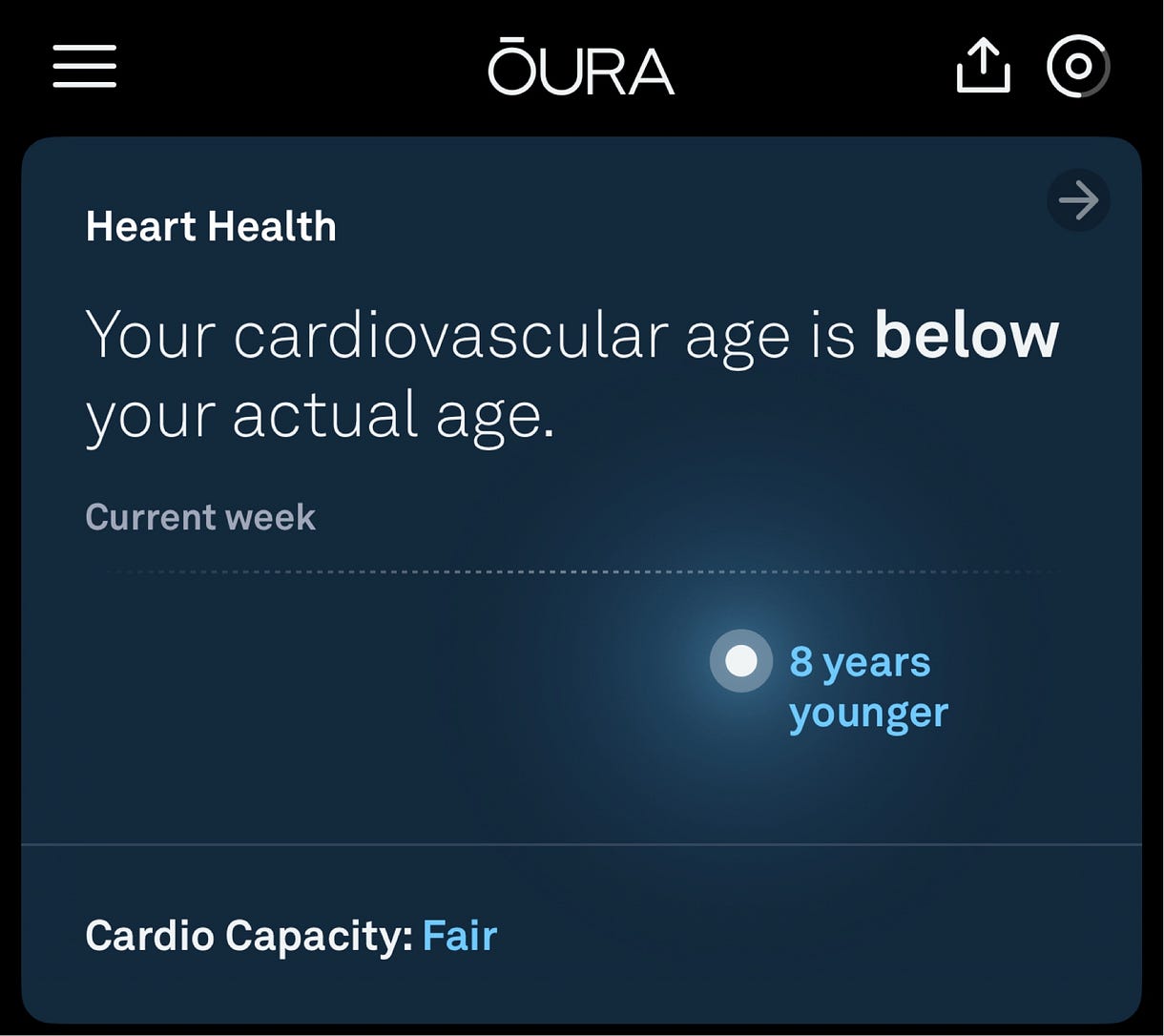
My Oura Ring shows that this modest cardio routine has a positive impact on my heart health.
Dad Bod Workout Goals
It’s not flashy. It’s not periodized. But it works.
Most of my lifts are done with free weights — barbells, dumbbells, bodyweight — with a few cable movements on my universal machine.
I still track every set and rep in a notebook, just like I’ve done for years. The difference now is I’m no longer chasing PRs or trying to squeeze out every ounce of hypertrophy.
My goal isn’t to outlift last week’s version of me — it’s to show up and match it.
In those brief, focused minutes, when I feel the blood rushing through my veins, see the pump in the mirror, hear the plates clanging — I reconnect with the part of myself that still loves to train.
That sense of presence. The feeling of power and direction is what keeps me grounded, even when I’m sleep-deprived and running on room-temp coffee.
Training isn’t about building the most impressive physique anymore. It’s about being a strong, stable man, capable of showing up for his family.

My “dad bod” after 4 months of following this new workout routine.
What I Let Go — and What I Gained
With my engineering background, I used to obsess over optimizing everything from my training split to macro tracking and recovery.
I wanted each variable dialed in and every decision based on data. Every lift, every meal, was part of my master plan.
But fatherhood has a way of humbling even your best-laid systems.
In those early weeks, I had to let go of the idea that my routine — or my physique — would ever be “optimal” again. And honestly, it stung. Not because I care about beach muscles, but because I had spent years equating progress with things I could measure and control.
Now, the only thing in my control was how fast I could change a diaper or how streamlined I could make my pump cleaning operation.
But within that loss of control came unexpected clarity.
- Instead of optimization, I focused on efficiency.
- Instead of chasing more, I embraced minimalism.
- Instead of bulking and cutting, I made peace with maintenance.
My workouts got shorter, but more focused. My training plan had less structure, but more freedom.
And as our parenting rhythm began to sync up, so did everything else.
My wife and I learned to divide and conquer. Dialing in our feeding schedule, errands, and sleep shifts just enough to keep our heads above water. We still don’t have it all figured out — but gradually, we got used to the noise.
People kept telling us, “Don’t worry — it gets easier.” But I’m not sure that’s true.
It’s not that life magically gets less demanding. We just adapt.
We grow and we become more resilient. Soon, what once felt impossible becomes the new normal.
It’s the same principle I’ve applied in the gym for decades:
The weight doesn’t get lighter — you just get stronger.

The Greek legend of Milos exemplifies how we adapt to increased demands.
Redefining Routine and Showing Up Strong
For me now, “routine” doesn’t mean following a rigid schedule. It means showing up — consistently.
Even if it’s late at night and I’m exhausted from the day, I’ll sneak in ten sets of bench press before bed. Not because I’m chasing a pump or prepping for a show — but because I’ve made a commitment to myself:
Never go more than two days without training.
Lifting weights used to be about aesthetics. Now, it’s about function. It’s how I train my body to respond to stress, to stay ready, to be capable.
At 39, I’m not a young first-time father. I think about the long game now.
I want to be a dad who can still run, wrestle, and roughhouse with his son in my 50s and beyond. That doesn’t require a perfect program. It just takes one simple principle:
Subject your body to physically demanding work — regularly.
That’s really what resistance training is, even at the highest level.
It’s not about optimizing every variable. It’s about doing hard things with your body often enough that resilience becomes your default state.
Once you understand that, you stop stressing about the perfect plan and start taking action with what you’ve got.
For me, fatherhood reshaped my mindset. Training is now about building a strong mental and physical foundation for my family.
And even though having a child changed everything, I wouldn’t change a thing.
If you’re navigating parenthood or another life-changing transition, I promise you can stay strong, even in the chaos.
Related Stories I Think You’ll Like
The Mental Framework I Used to Beat Cancer & Climb Mountains
What It Was Like Tearing My Pectoral Muscle